
Standing in an electronics aisle trying to figure out whether a smart plug will actually work with the smart speaker you already own, without opening the box and testing it at home, is a frustration a lot of people have quietly given up on solving. Smart home shopping has long involved a small leap of faith that everything will talk to everything else.
That is the exact problem the matter smart home standard was built to fix. If you have seen the Matter logo on packaging and wondered what is Matter smart home actually about, this explainer breaks it down in plain terms, without the technical jargon that usually surrounds smart home standards.
The Problem Matter Was Designed to Solve
Before Matter, smart home devices were built around competing ecosystems, meaning a device designed primarily for Amazon Alexa might work poorly or not at all with Google Home or Apple HomeKit. Shoppers had to commit to one ecosystem and then check every future purchase against it, which discouraged experimentation and locked people into a single brand’s product line.
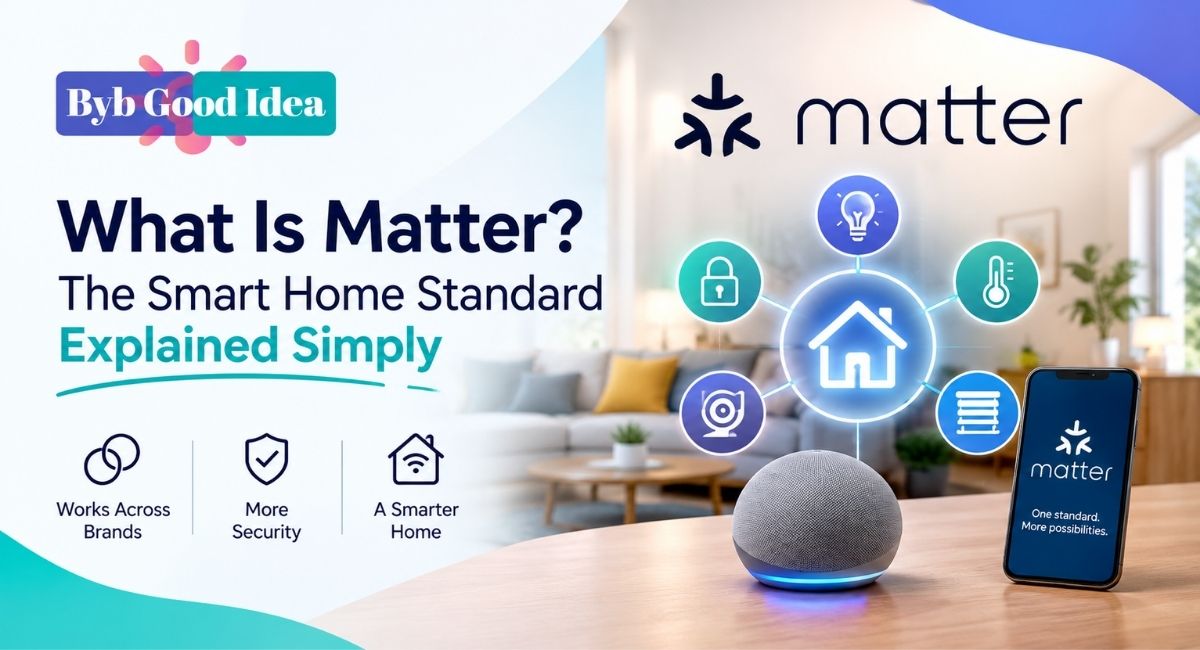
Matter is an industry standard, developed by the Connectivity Standards Alliance, that lets compatible smart home devices work across multiple ecosystems without needing separate versions for each one. Rather than replacing Alexa, Google Home, or HomeKit, Matter acts as a shared language those platforms can all understand.
Who Is Behind Matter
The Connectivity Standards Alliance, often shortened to CSA, is the organization responsible for developing and maintaining the Matter standard. Its membership includes major technology companies such as Amazon, Google, Apple, and Samsung, which is a significant part of why Matter has gained broad industry support rather than becoming just another competing standard.
Devices that meet the certification requirements carry the official Matter logo, which is meant to serve as a reliable signal that the product will work across supported ecosystems without requiring manual workarounds.
How Matter Actually Works
A Shared Application Layer
Matter operates at what is often called the application layer, meaning it standardizes how devices describe themselves and communicate commands, regardless of which underlying network technology carries that communication. This is why a Matter certified light bulb can be controlled through Alexa, Google Home, or HomeKit without needing a different version for each.
Thread and Wi-Fi as Underlying Networks
Matter devices typically connect using either Wi-Fi or Thread, a low power wireless mesh networking technology designed specifically for smart home devices. Thread is particularly useful for battery powered devices like sensors and locks, since it uses significantly less power than Wi-Fi while still maintaining a reliable connection across the home.
Local Control as a Core Design Principle
One of Matter’s design goals is enabling local control, meaning many commands can be processed directly on your home network rather than needing to route through the manufacturer’s cloud servers. This can improve response speed and adds a layer of resilience if internet connectivity temporarily drops, though it depends on both the specific device and the hub or app used to control it.
What This Means for Choosing Smart Home Devices
In practice, Matter certification means you can shop with more confidence that a device will work with whichever voice assistant or app ecosystem you already use, rather than needing to research compatibility for every ecosystem separately. This is especially useful for households that use a mix of platforms, such as an Amazon Echo speaker alongside an iPhone running HomeKit.
If you are starting from scratch, our guide to how to set up a smart home on a budget and our roundup of affordable smart home projects both cover practical starting points that work well with Matter certified devices specifically.
Checking Device Compatibility Before You Buy
The clearest signal is the official Matter logo on the packaging or product listing, though it is also worth confirming which specific hub or app is required, since some devices need a compatible hub present in the home even with Matter support. Checking product listings and manufacturer documentation before purchase remains the most reliable way to confirm is my device matter compatible for your specific setup.
For lighting specifically, our guide to affordable smart lighting options covers which product lines currently offer strong Matter support, since lighting was one of the earliest and most widely adopted device categories under the standard.
Matter and Your Existing Devices
Many existing smart home devices purchased before Matter’s release have received firmware updates adding Matter support, so it is worth checking manufacturer update notes before assuming an older device needs replacing. If you are repurposing an old smartphone as a smart home controller, our guide to turning an old phone into a smart home device covers how that fits alongside a Matter based setup.
For anyone building out audio alongside their smart home devices, our list of best wireless speakers for small homes is a useful companion resource, since many newer speaker models now double as smart home hubs supporting Matter and Thread.
Matter vs Ecosystem Specific Standards
| Aspect | Before Matter | With Matter |
| Ecosystem compatibility | Often limited to one platform | Works across supported platforms |
| Shopping confidence | Required careful research per device | Simplified by certification logo |
| Local control | Varied significantly by brand | A core design goal of the standard |
Answers You Should Know
Does Matter replace Alexa, Google Home, and Apple HomeKit?
No. Matter works alongside these platforms as a shared communication standard, allowing certified devices to work across all of them rather than replacing any single ecosystem.
Do I need a hub to use Matter devices?
Some devices, particularly Thread based ones, need a compatible hub or border router present in the home, which is often built into newer smart speakers or displays. Wi-Fi based Matter devices generally have fewer additional hub requirements.
How do I know if my current smart home devices support Matter?
Check the manufacturer’s website or recent update notes, since many existing devices have gained Matter support through firmware updates rather than requiring new hardware.
Is Matter only relevant for new smart home purchases?
Not entirely, since many existing devices can gain compatibility through updates, but Matter certification is most useful to check specifically when buying new devices going forward.
Does Matter improve smart home security?
Matter includes security requirements as part of its certification process, and local control reduces reliance on cloud servers for some functions, which can be a meaningful security benefit depending on the specific device and setup.
Final Thoughts
Matter exists to solve a genuinely common frustration: buying a smart home device and hoping it works with what you already own. Understanding the basics of how it works, and checking for the certification logo before buying, makes future smart home purchases considerably less risky, regardless of which voice assistant or app ecosystem your household prefers.
At BYB Good Idea, we cover practical smart home guidance that cuts through the jargon. Explore the resources below to keep building a connected home that actually works together.
Helpful resources: