
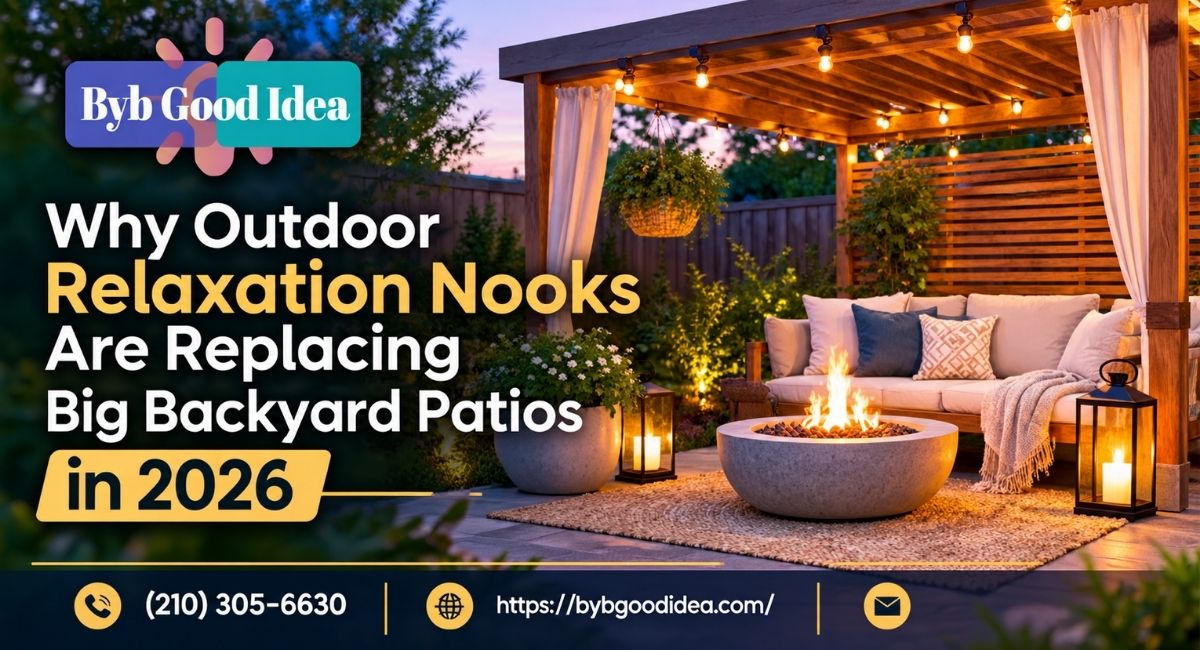
A sprawling patio with a full outdoor dining set looks great in a catalog, but a lot of homeowners quietly admit it barely gets used beyond a few gatherings a year. Most days, what people actually want from their backyard is somewhere small and comfortable to sit with a coffee or a book, not a space built for hosting fifteen people.
That gap between what gets built and what gets used is a big part of why backyard relaxation nook ideas have picked up so much momentum. Rather than one large, general purpose patio, more homeowners are carving out a smaller, more private zone designed around daily use rather than occasional entertaining.
Why the Shift Is Happening Now
Large patio installations are expensive, and outdoor furniture sized for a crowd often sits unused for most of the year outside of a handful of gatherings. A smaller, well designed nook costs less to build, gets used far more consistently, and tends to feel more personal, since it is designed around how one or two people actually spend time outdoors day to day.
There is also a practical maintenance angle. A smaller paved or decked area is simpler and cheaper to maintain than an oversized patio, and a nook tucked into a corner of the yard often requires less clearing and grading than a full scale patio project, particularly on smaller or irregularly shaped lots.
What Makes a Backyard Relaxation Space Work
A Sense of Enclosure
Unlike an open patio, a relaxation nook typically benefits from some degree of visual separation from the rest of the yard, whether that is planting, a low fence, or an overhead structure. This enclosure is part of what makes the space feel like a distinct retreat rather than simply a section of open lawn with furniture on it.
Shade and Weather Protection
A pergola remains one of the most popular ways to add overhead structure to a small outdoor nook, since it defines the space visually while still allowing airflow and partial light through, unlike a solid roof. Adding a retractable canopy or shade cloth to a pergola frame extends the usable hours of the space across more of the day.
Comfortable, Weather Appropriate Seating
A hammock, a pair of deep lounge chairs, or a small daybed tend to suit a relaxation nook better than standard dining chairs, since the goal is comfort over a long stretch of time rather than a quick meal. Choosing outdoor rated fabric and frame materials matters more here than in a covered patio, since a nook is often more exposed to direct sun and rain.
Designing a Small Outdoor Nook Step by Step
Step One: Choose the Right Spot
Look for a corner of the yard that already has some natural shade, privacy, or an interesting view, since working with existing conditions reduces the amount of construction needed. A spot slightly separated from the main lawn or patio area, even by just a few feet, helps reinforce the feeling of a distinct retreat.
Step Two: Define the Boundaries
A simple gravel or paver base marks the footprint of the nook clearly, even without a full deck build. Adding planting, a low screen, or a pergola frame around the edges further reinforces the boundary without requiring a solid wall or fence.
Step Three: Add Overhead Structure
A basic pergola kit is one of the more approachable structural projects for an intermediate DIYer, and our guide to building a budget friendly outdoor deck covers foundational skills that carry over directly to a pergola or platform base for a nook.
Step Four: Layer in Lighting
String lights remain a reliable, low cost way to extend a nook’s usable hours into the evening, and our roundup of stylish outdoor floor lamps covers freestanding options for nooks that need more direct, adjustable light than string lighting alone provides.
Step Five: Choose Durable, Weather Resistant Furniture
Furniture left outdoors year round needs materials that can handle sun, rain, and temperature swings without warping or fading quickly. Our guides on outdoor wood furniture and how to weatherproof wood furniture for outdoors cover material choices and finishing steps that extend the life of an outdoor build significantly.
Choosing the Right Wood for an Outdoor Build
Not every wood suited to indoor furniture holds up well outside, since exposure to moisture and UV light accelerates warping and decay. Our comparison of whether acacia wood is good for outdoor furniture covers one of the more popular budget friendly options, while more premium builds often lean on naturally weather resistant species.
If sustainability is a priority for your build, our overview of eco friendly materials for modern home renovations covers options that extend to outdoor projects as well, not just interior remodels.
Small Nook vs Large Patio: A Side by Side Look
| Factor | Small Relaxation Nook | Large Patio |
| Typical build cost | Lower | Higher |
| Daily use likelihood | High | Often occasional |
| Maintenance | Lower | Higher |
| Best for | Everyday personal use | Larger gatherings |
Common Mistakes When Building a Small Outdoor Nook
- Skipping a proper base or foundation, which leads to uneven furniture and drainage issues over time.
- Choosing furniture and fabrics that are not genuinely rated for outdoor exposure, leading to fading or mildew within a season.
- Placing the nook too close to a fence line or neighbouring property without checking for adequate privacy.
FAQs
How much space do I need for a backyard relaxation nook?
Many effective nooks fit into an area as small as eight feet by eight feet, particularly hammock or two chair setups. A pergola covered seating area typically needs slightly more room to feel comfortable rather than cramped.
Do I need a permit to build a small pergola?
This depends on your local building codes and the size and height of the structure. Checking with your local permitting office before starting construction is worthwhile, since requirements vary significantly by area.
What is the most affordable way to create a private outdoor nook?
A gravel base, a simple pergola kit, and layered planting for privacy is usually the most budget friendly combination, since it avoids the cost of a full deck or permanent fencing.
How do I keep outdoor furniture from fading in direct sun?
Choosing UV resistant fabrics and finishes designed for outdoor use, along with some shade from a pergola or umbrella, significantly slows fading compared with furniture left in constant direct sun.
Can a small nook work in a yard with very little natural shade?
Yes, a pergola with a shade cloth or retractable canopy can create usable shade even in a yard without existing trees, though it typically adds to the overall project cost.
Final Thoughts
The shift toward smaller outdoor relaxation nooks reflects a fairly simple realization: most people get more genuine daily value from a small, comfortable, private spot than from a large patio designed mainly for occasional entertaining. Starting with a clear sense of how you actually want to use the space tends to produce a far more satisfying result than building the biggest patio your yard can fit.
At BYB Good Idea, we focus on practical outdoor and indoor projects that fit real budgets and real routines. Explore the resources below to keep planning your own backyard retreat.