

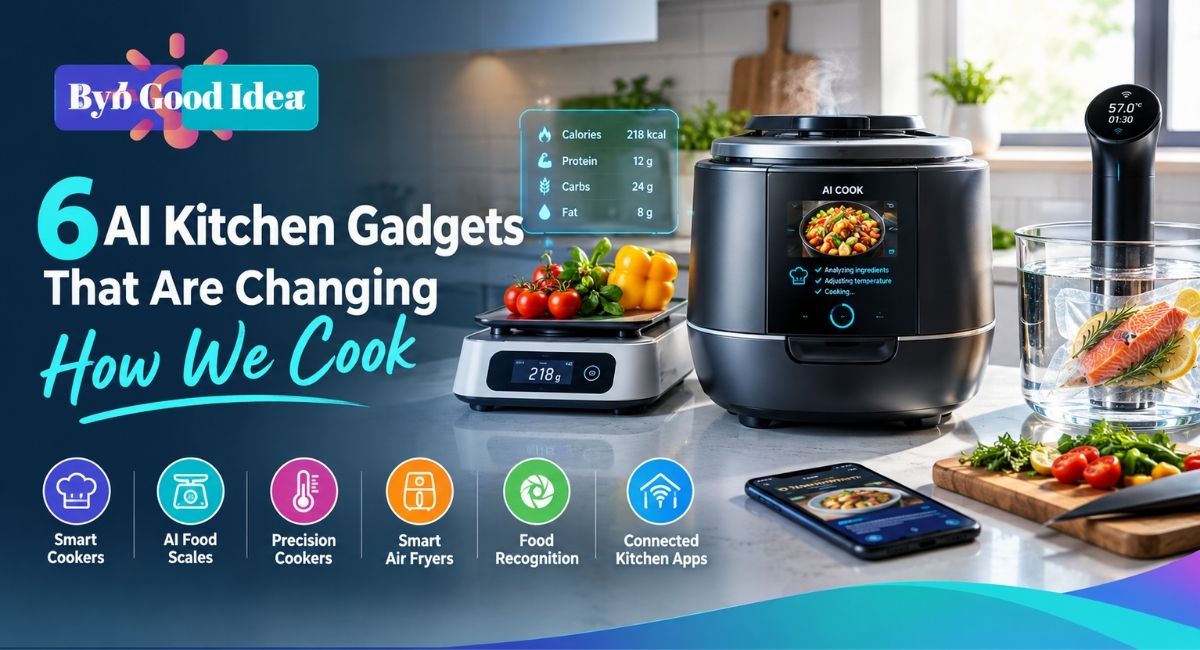
Overcooked chicken, a forgotten pot on the stove, and a fridge full of ingredients with no clear plan for dinner are common enough kitchen frustrations that a growing number of appliances now exist specifically to solve them. The kitchen has quietly become one of the most active categories for practical AI hardware, not flashy demo tech, but tools solving genuinely everyday problems.
The label ai kitchen gadgets covers a wide range of devices at this point, from ovens that recognize food automatically to apps that plan meals around what is already in your fridge. This guide covers six categories worth knowing about, along with a grounded look at where they genuinely help and where the hype outpaces the reality.
What Makes a Kitchen Gadget Genuinely AI Powered
Not every product marketed with the word smart or AI actually uses meaningful machine learning. A Wi-Fi connected slow cooker that lets you check progress from an app is convenient, but it is not doing anything an AI kitchen gadget in the fuller sense does, which typically involves recognizing food through a camera or sensor and adjusting cooking behaviour automatically in response.
Understanding this distinction matters before buying, since genuinely AI driven appliances tend to cost more and offer real functional benefits, while simply app connected versions mainly add remote monitoring convenience.
6 AI Kitchen Gadgets Worth Knowing About
1. AI Powered Smart Ovens
Smart ovens with built in cameras can identify certain foods placed inside and automatically suggest or apply appropriate cooking settings, removing much of the guesswork around temperature and timing. Higher end models manage multi stage cooking cycles, adjusting heat and airflow throughout the process rather than relying on a single fixed setting, which tends to produce more consistent results than a standard oven for complex dishes.
2. Ultrasonic and Smart Knives
Ultrasonic knife technology uses rapid blade vibration to reduce cutting resistance, making it noticeably easier to slice through sticky or delicate foods like fresh bread or soft cake without tearing. While not AI in the traditional sense, these tools are frequently grouped with the broader smart kitchen category because they pair with connected features in some newer models, such as usage tracking or sharpness alerts.
3. AI Recipe and Meal Planning Assistants
Apps and connected displays that suggest recipes based on ingredients you already have, dietary preferences, or what is nearing its expiry date reduce both food waste and daily decision fatigue around what to cook. Some integrate directly with a smart oven or cooktop, sending settings automatically once a recipe is selected, which removes an extra manual step from the cooking process.
4. Smart Sous Vide Devices
Sous vide cooking, which involves cooking food in a precisely controlled water bath, has long benefited from digital temperature control, and newer AI enabled versions add features like automatically adjusting cook time based on the thickness of the food detected through a paired app or built in sensor. This reduces one of the main manual calculations sous vide cooking traditionally required.
5. AI Grill and Outdoor Cooking Controllers
Smart grills and standalone controllers use temperature sensors and connected apps to maintain consistent heat automatically, correcting for wind, fuel level, or opening the lid, which are all factors that traditionally require constant manual attention during outdoor cooking.
6. Automated Countertop Herb and Produce Gardens
Small countertop growing systems use sensors to automatically manage light, water, and nutrient delivery for herbs and leafy greens, making it possible to keep a small home garden alive without daily manual care. These are not cooking devices in the traditional sense, but they support the broader shift toward AI assisted, lower effort home food systems.
Who Actually Benefits From AI Kitchen Gadgets
Busy households juggling limited time for meal prep tend to see the clearest benefit, since these devices primarily save decision making time and reduce the margin for cooking error rather than replacing skill entirely. Someone who already cooks confidently and enjoys the hands on process may find less value in automation that removes some of that direct control.
If your interest in AI kitchen tools is part of a broader move toward a connected home, our guide to affordable smart home devices and our walkthrough of how to set up a smart home on a budget both cover the foundational connectivity that makes many of these kitchen devices work smoothly together.
Compatibility With Your Existing Smart Home Setup
Many AI kitchen gadgets connect through the same Wi-Fi and app ecosystems as other smart home devices, which makes checking compatibility with your existing setup worthwhile before buying. Our explainer on what is Matter, the smart home standard is a useful read before investing heavily in any connected kitchen device, since it affects how well new gadgets will work alongside what you already own.
If you already own an older phone gathering dust, our guide to turning an old phone into a smart home device covers repurposing it as a dedicated kitchen display for recipes and app control, avoiding the cost of a dedicated smart display.
Broader AI Tools Worth Pairing With a Smart Kitchen
Kitchen specific gadgets work best alongside general productivity tools that help with the planning side of cooking, from grocery lists to meal scheduling. Our roundup of top AI tools that make your daily tasks easier and our list of affordable AI apps to organize your life both cover options that complement a smart kitchen setup without requiring additional hardware purchases.
Comparing the Six Categories at a Glance
| Gadget Type | Main Benefit | Best For |
| AI smart oven | Automatic settings and multi stage cooking | Busy households |
| Ultrasonic knife | Cleaner cuts on delicate food | Frequent bakers and cooks |
| AI recipe assistant | Reduces meal planning effort | Anyone reducing food waste |
| Smart sous vide | Precision cooking with less calculation | Home cooks refining technique |
| AI grill controller | Consistent outdoor cooking temperature | Regular outdoor cooks |
What to Consider Before Buying
- Check whether the device genuinely uses sensors or cameras to adapt automatically, rather than simply offering app based remote control.
- Confirm the appliance works with your existing smart home ecosystem before committing to a specific brand.
- Weigh subscription costs for advanced features, since some AI kitchen devices require an ongoing fee for full functionality.
Frequently Asked Questions
Are AI kitchen gadgets worth the extra cost compared with standard appliances?
For households that cook frequently and value consistency or time savings, many people find the cost justified. For occasional cooks, a standard appliance may deliver similar day to day satisfaction at a lower price.
Do AI kitchen gadgets require an internet connection to work?
Most rely on Wi-Fi for remote monitoring and software updates, and some core automated features may be limited without an internet connection, so checking offline functionality is worthwhile before buying.
Can AI ovens actually recognize different types of food accurately?
Accuracy varies by model and has improved significantly in recent years, though it is not perfect across every food type. Most models still allow manual override if automatic recognition gets something wrong.
What is the easiest AI kitchen gadget to start with?
A recipe and meal planning assistant app is typically the lowest cost and lowest commitment entry point, since it requires no hardware purchase and can be tried for free in many cases.
Do smart kitchen gadgets save money over time?
They can, mainly through reduced food waste and more consistent cooking results, though the upfront cost of hardware means savings usually accumulate gradually rather than immediately.
Final Thoughts
AI kitchen gadgets have moved well past novelty status into genuinely useful territory for households that cook regularly, though they are not essential for everyone. Starting with the category that addresses your specific kitchen frustration, whether that is inconsistent cooking, meal planning fatigue, or food waste, is a more sensible approach than trying to automate the entire kitchen at once.
At BYB Good Idea, we cover practical technology and home upgrades that genuinely earn their place in daily life. Explore the resources below to keep building out a smarter, more efficient kitchen.