

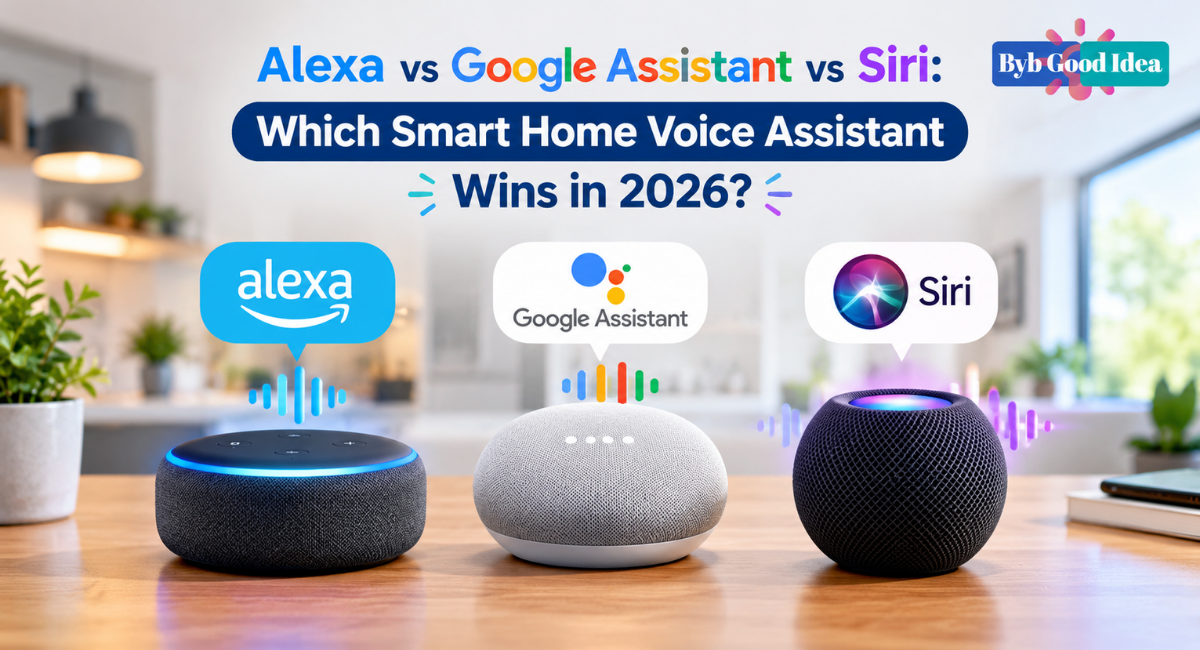
Picking a smart speaker used to feel like a fairly low stakes decision, until the first time someone tried to add a smart plug that only worked properly with a different voice assistant than the one already running the rest of the house. That single mismatched purchase is usually what pushes people to actually research alexa vs google assistant vs siri before buying anything else.
There is no universally correct answer to which is better alexa or google assistant, since the right choice depends heavily on which phone you use, which devices you already own, and how much you value privacy versus raw device compatibility. This comparison breaks down where each platform genuinely differs in 2026, without pretending one is objectively superior across every category.
How These Platforms Have Evolved
All three major voice assistants have moved well beyond simple voice commands and timers over the past couple of years, incorporating more advanced generative AI features for natural conversation, multi step requests, and broader question answering. Amazon, Google, and Apple have each invested heavily in upgrading their assistants with newer AI models, which has narrowed some of the historical gaps between them, particularly around understanding natural, conversational phrasing rather than rigid command structures.
Despite these upgrades, the core differentiators between the three platforms remain fairly consistent: device compatibility breadth, ecosystem integration, and approach to privacy and on device processing.
Amazon Alexa: Best Device Compatibility
Alexa has historically supported the widest range of third party smart home devices, largely because Amazon opened its developer tools early and aggressively courted device manufacturers to build Alexa compatible products. For households with a mix of brands across lighting, locks, plugs, and sensors, Alexa remains one of the safer bets purely from a compatibility standpoint.
Echo speakers and displays are also generally competitively priced compared with equivalent Google and Apple hardware, which makes Alexa an accessible entry point for households building a smart home setup on a budget. Our guide to affordable smart home devices reflects this, since a large share of budget friendly options are Alexa compatible.
Google Assistant: Strongest for Conversational Accuracy
Google’s assistant has generally led in answering complex, multi part questions accurately, which draws on Google’s search engine background and its strength in natural language processing. For households that lean heavily on asking questions, getting directions, or handling follow up queries in a natural back and forth style, this tends to be the more capable option of the three.
Google’s ecosystem also integrates tightly with Android phones, Nest devices, and Google’s broader productivity tools, which is a significant advantage for households already using Gmail, Google Calendar, or Android devices day to day.
Apple Siri: Best for Privacy and Apple Ecosystem Users
Siri has historically prioritized on device processing and data minimization more than its two main competitors, which appeals strongly to privacy conscious users. Integration with the Apple ecosystem, including iPhone, iPad, Mac, Apple Watch, and HomeKit, is genuinely seamless for households already fully invested in Apple hardware.
The trade off has traditionally been a narrower range of compatible third party smart home devices compared with Alexa, though Matter certified devices have meaningfully closed this gap, since Matter compatible products generally work with HomeKit as well as Alexa and Google Home. Our explainer on what Matter is and how it works covers this shift in more detail.
Comparing the Three Platforms Side by Side
| Factor | Alexa | Google Assistant | Siri |
| Device compatibility | Widest | Strong | Improving via Matter |
| Conversational accuracy | Strong | Generally leading | Improving steadily |
| Privacy approach | Cloud reliant | Cloud reliant | Prioritizes on device processing |
| Best ecosystem fit | Mixed brand households | Android and Google users | Apple hardware households |
How to Choose Based on What You Already Own
The single biggest factor in this decision is usually the phone in your pocket, since both Google Assistant and Siri integrate most deeply with their own respective phone operating systems. Alexa remains the more platform neutral choice, working reasonably well regardless of whether you use an iPhone or an Android device.
If you are setting up a smart home from scratch rather than working around existing devices, our guide to how to set up a smart home on a budget walks through prioritizing purchases in a sensible order regardless of which assistant you ultimately choose.
Speakers and Displays Worth Considering
Hardware quality varies meaningfully within each ecosystem, not just between them. Our roundup of best wireless speakers for small homes covers options across price points, and our guide to affordable smart lighting options is worth checking alongside your assistant choice, since lighting is one of the most common starting points for a new smart home.
If you want to experiment with a voice assistant before committing to dedicated hardware, our guide to turning an old phone into a smart home device covers running assistant apps on hardware you already own, and our broader roundup of AI tools that make your daily tasks easier covers software options that complement any of the three platforms.
What to Weigh Before Committing to One Ecosystem
- Which phone operating system your household primarily uses, since this affects integration depth more than any other single factor.
- How much you prioritize on device privacy versus the broadest possible third party device compatibility.
- Whether the devices you already own or plan to buy carry Matter certification, which reduces how much this decision locks you into a single ecosystem long term.
Frequently Asked Questions
Which voice assistant works best for smart home control?
Alexa generally offers the widest device compatibility, though Google Assistant and Siri have both closed much of that gap, particularly for households already using Google or Apple hardware.
Can I use more than one voice assistant in the same home?
Yes, many households run Alexa and Google Home devices side by side, particularly as Matter certified devices increasingly work across multiple ecosystems without conflict.
Is Siri less capable than Alexa or Google Assistant?
Siri has historically lagged in some areas of conversational complexity but has closed much of that gap with recent updates, while maintaining a stronger emphasis on privacy and on device processing than its two main competitors.
Does my choice of voice assistant limit which smart home devices I can buy?
Less than it used to, thanks to the Matter standard, which allows certified devices to work across Alexa, Google Home, and HomeKit rather than requiring separate versions for each ecosystem.
Which assistant is best for privacy conscious households?
Siri generally leads in this area due to its emphasis on on device processing and minimal data collection, making it the preferred option for users who prioritize privacy above raw device compatibility.
Final Thoughts
There is no single winner in the Alexa versus Google Assistant versus Siri comparison, since each platform is genuinely strongest in a different area: Alexa for device compatibility, Google for conversational accuracy, and Siri for privacy and Apple ecosystem integration. The right choice comes down to matching the platform to your existing devices and priorities rather than chasing whichever one currently has the most headlines.
At BYB Good Idea, we cover practical smart home comparisons to help you buy with confidence. Explore the resources below to keep building out a setup that works for your household.