
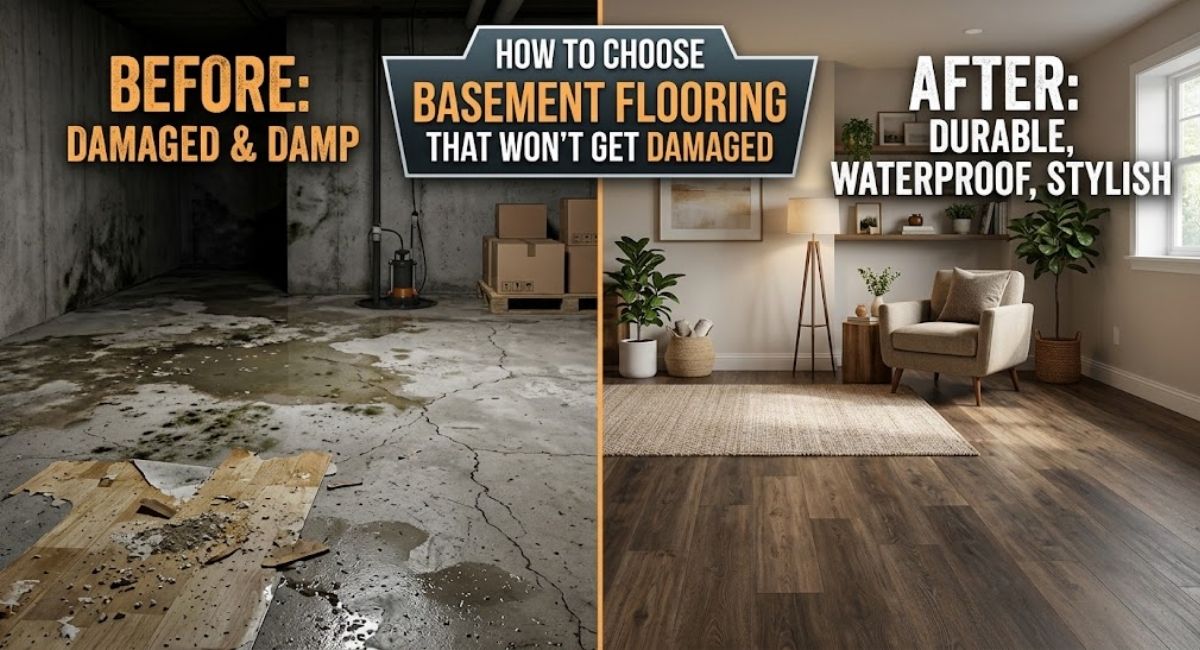
You finally waterproofed the basement, sealed the cracks, and stopped the seasonal flooding that used to ruin everything down there. Then you install a beautiful new floor, and within a year it is bubbling, warping, or smells faintly musty every time it rains. If that sounds painfully familiar, the problem usually is not the waterproofing work you already did. It is choosing flooring that was never designed to handle a basement environment in the first place.
Basements behave differently from the rest of a home. Concrete slabs sit directly on or near the ground, which means moisture vapor can rise up through the slab even without a visible leak, a process called moisture vapor transmission. Combine that with generally cooler, more humid conditions, and it becomes clear why flooring that performs perfectly upstairs can fail within a couple of years in a basement.
This guide walks through how to choose basement flooring that actually holds up, from understanding moisture sources to comparing the materials best suited for below grade installation.
Why Basements Damage Flooring Differently Than Other Rooms
Before choosing a specific flooring material, it helps to understand exactly what basements do to flooring that other rooms typically do not.
Moisture vapor transmission. Even a basement with no visible water intrusion can have moisture vapor moving up through the concrete slab from the surrounding soil. This is invisible day to day but can gradually damage moisture sensitive flooring materials like solid hardwood or standard carpet padding over time.
Temperature fluctuation. Basements tend to run cooler and more consistently humid than upper floors, which affects how certain materials expand, contract, or absorb ambient moisture from the air itself, separate from any direct water contact.
Higher flood risk. Even a well waterproofed basement carries some residual risk of water intrusion during extreme weather or a plumbing failure, since basements sit at the lowest point of a home’s drainage path by definition. Flooring that can tolerate occasional water exposure without being destroyed offers a meaningful safety margin compared to flooring that fails after a single incident.
If you have already addressed structural moisture issues, our guide on waterproofing your basement without professionals is worth reviewing before flooring installation, since flooring should always go in after moisture control measures are complete and tested, not before.
Testing Your Basement for Moisture Before Choosing Flooring
Before selecting a flooring material, it is worth confirming the actual moisture conditions in your specific basement rather than assuming. A simple plastic sheet test involves taping a square of clear plastic sheeting tightly to the concrete slab and checking after 24 to 48 hours for condensation underneath, which indicates moisture is moving through the slab. More precise results come from a calcium chloride test or an electronic moisture meter, both of which measure vapor emission more accurately and are worth considering for a larger renovation project or if the plastic sheet test shows any sign of trapped moisture.
Understanding your baseline moisture level shapes which flooring options are realistic. A basement with persistently high moisture readings will need either more aggressive moisture mitigation before installation or a flooring material specifically rated to tolerate ongoing vapor exposure, such as certain vinyl or epoxy systems.
1. Luxury Vinyl Plank (LVP)
LVP has become one of the most recommended flooring choices for basements, largely because it is fully waterproof at the plank level and unaffected by the moisture vapor transmission that damages wood based products. It also offers a realistic wood look, which many homeowners prefer over the more industrial appearance of bare or coated concrete.
Installation typically involves either a floating click together system placed over a proper underlayment, or a glue down method directly to the slab, depending on the specific product and subfloor conditions. Floating installations generally perform better in basements with any residual moisture concern, since they allow a small amount of airflow between the slab and the flooring rather than sealing moisture in tightly against an adhesive layer.
2. Epoxy Flooring
Epoxy coatings create a seamless, highly durable surface directly over a properly prepared concrete slab, making them a popular choice for basements used as workshops, gyms, or utility spaces. Once cured, epoxy resists moisture, staining, and abrasion extremely well, and it eliminates seams entirely, which removes one of the more common points of moisture related failure in other flooring types.
Proper surface preparation is critical for epoxy to bond and perform correctly, since any residual moisture or contamination on the slab can cause the coating to peel or bubble over time. For a full breakdown of what epoxy flooring involves, including cost and application steps, our guide on what is epoxy flooring covers the process in more detail, and our comparison of polyaspartic floor coatings is worth reviewing if you want a faster curing alternative to traditional epoxy.
3. Sealed and Polished Concrete
Rather than covering the slab entirely, some homeowners choose to polish and seal the existing concrete directly, which is often the most moisture tolerant option available since there is no separate material layer to trap vapor or warp. Properly sealed concrete resists staining and cleans easily, making it a practical choice for basements used for storage, laundry, or general utility purposes.
The main trade off is comfort and appearance, since bare concrete, even polished, reads as a more industrial surface than vinyl or carpet tile. Area rugs and radiant floor heating, if installed beneath the slab during a larger renovation, can address both the comfort and temperature concerns without compromising the moisture resistance that makes concrete such a reliable basement option.
4. Rubber Flooring
Rubber flooring, often sold in interlocking tiles or rolled sheets, offers excellent moisture resistance along with cushioning that makes it a strong choice for basement gyms, playrooms, or workshop areas. It tolerates minor water exposure without damage and provides better underfoot comfort and sound dampening than hard surfaces like tile or polished concrete.
Rubber is less commonly used in basement living rooms or bedrooms due to its more utilitarian appearance, but for functional basement spaces where durability and moisture tolerance matter more than aesthetics, it remains one of the more forgiving options available.
5. Carpet Tile Designed for Below Grade Use
Traditional wall to wall carpet is generally discouraged in basements, since standard padding absorbs and retains moisture, creating conditions that can support mold growth even after a minor water event. Carpet tile designed specifically for below grade or basement use addresses much of this concern, using moisture resistant backing and a modular design that allows individual tiles to be lifted, dried, or replaced if a section becomes wet, rather than requiring an entire room’s carpet to be torn out.
This option suits basements being finished as bedrooms, home offices, or media rooms where a softer, warmer surface underfoot is a priority, provided the specific product is rated for below grade installation rather than a standard residential carpet tile intended for upper floors.
Comparing Basement Flooring Options
| Flooring Type | Moisture Tolerance | Comfort Underfoot | Best For |
| Luxury vinyl plank | Excellent | Moderate | Living areas, bedrooms, general use |
| Epoxy coating | Excellent | Low | Workshops, garages, utility spaces |
| Sealed concrete | Excellent | Low, unless heated | Storage, laundry, utility rooms |
| Rubber flooring | Very good | High | Gyms, playrooms, workshops |
| Below grade carpet tile | Good, with proper backing | High | Bedrooms, offices, media rooms |
The Role of a Moisture Barrier
Regardless of which flooring material you choose, a proper moisture barrier between the concrete subfloor and the finished flooring significantly improves long term performance in most basement installations. For floating floors like LVP, this typically means a vapor barrier underlayment placed directly on the slab before the planks go down. For carpet tile, moisture resistant backing serves a similar function built directly into the product.
Skipping this step to save on upfront cost is one of the most common reasons basement flooring fails prematurely, even when the material itself was a reasonable choice. A moisture barrier is a relatively small additional cost compared to the expense of replacing warped or moldy flooring within a few years of installation.
What to Avoid in Basement Flooring
Solid hardwood. Solid wood flooring expands and contracts significantly with moisture exposure and is generally not recommended for basement installation, regardless of how well the space has been waterproofed, since ongoing vapor transmission through the slab poses an ongoing risk even without a visible leak.
Standard wall to wall carpet without below grade backing. As covered above, standard carpet padding retains moisture and can support mold growth, making it a poor choice for a space with any residual moisture risk.
Laminate not rated for below grade use. Some laminate flooring is not designed to handle basement level moisture exposure, even with a moisture barrier underlayment. Checking the manufacturer’s specifications for below grade suitability before purchasing is an important step many homeowners skip.
Cost Considerations for Basement Flooring Projects
Basement flooring costs vary significantly depending on material, square footage, and whether professional installation is required. Epoxy coatings and sealed concrete tend to sit on the more affordable end for larger basement footprints, particularly for utility focused spaces, while LVP and carpet tile cost more per square foot but offer a more finished, comfortable result suited to living spaces.
It is worth factoring in the cost of moisture testing and any necessary moisture barrier or vapor mitigation work into the overall project budget, rather than treating flooring material cost as the only expense. A cost to install hardwood flooring style comparison does not apply well here, since hardwood is generally unsuitable for basements regardless of price, making it more useful to compare LVP, epoxy, and carpet tile costs directly against each other for a realistic basement specific budget.
Sequencing a Basement Flooring Project Correctly
Getting the order of operations right matters as much as the material choice itself. Waterproofing and moisture mitigation work should always be completed and given time to prove effective, ideally through at least one full season including any particularly wet weather, before finished flooring goes in. Installing new flooring immediately after waterproofing work, without observing how the space performs over time, risks covering up a problem that has not actually been fully resolved.
Subfloor preparation, including moisture testing and addressing any cracks or unevenness in the slab, should happen next. Our guide on fixing cracks in walls and foundations is a useful reference if structural issues are part of what led to moisture problems in the first place. Only after these steps are complete does it make sense to move forward with the finished flooring material itself.
Basement Flooring FAQs
Can I install hardwood flooring in a basement?
Solid hardwood is generally not recommended for basements due to ongoing moisture vapor transmission through concrete slabs, even in a well waterproofed space. Engineered wood products rated specifically for below grade use are a safer alternative if a wood look is a priority.
Is epoxy or vinyl plank better for a basement?
Both perform well, but the right choice depends on how the space is used. Epoxy suits utility spaces, workshops, and garages, while vinyl plank offers a warmer, more residential appearance better suited to basement living areas and bedrooms.
Do I need a moisture barrier under basement flooring?
Yes, in almost every case. A proper moisture barrier significantly reduces the risk of warping, mold, or premature flooring failure, even in a basement that has already been waterproofed.
How do I know if my basement has a moisture problem before installing flooring?
A simple plastic sheet test can indicate moisture vapor transmission, while a calcium chloride test or electronic moisture meter provides more precise readings. Testing before installation helps determine which flooring options are realistic for your specific space.
What is the cheapest durable flooring for a basement?
Sealed or polished concrete is often the most affordable option for larger basement footprints, particularly for utility focused spaces, while still offering excellent moisture resistance.
Final Thoughts
Choosing basement flooring that will not get damaged comes down to understanding your specific moisture conditions, preparing the subfloor properly, and selecting a material genuinely rated for below grade installation. Skipping moisture testing or reusing flooring materials better suited to upper floors is the most common reason basement projects fail within a few years.
At BYB Good Idea, we believe a lasting basement renovation starts with getting the fundamentals right before the finishing touches go in. For related guidance on preparing your basement before flooring installation, see our guides on DIY bathroom and moisture repair basics and eco friendly materials for modern renovations.
Helpful resources:
- U.S. Environmental Protection Agency, moisture control guidance.
- National Association of Home Builders, basement finishing guidance.