

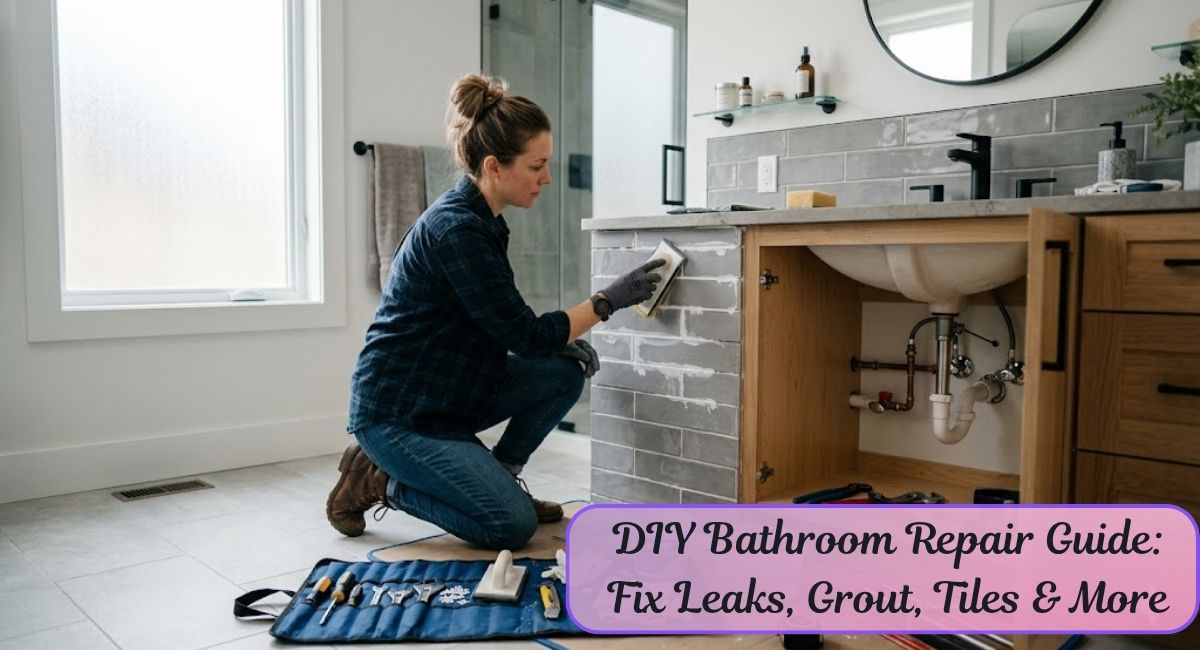
A bathroom is one of the most used spaces in any home, and it quietly handles a lot every single day. Water, humidity, constant cleaning, and heavy use all take a toll over time. Small issues like a dripping faucet or cracked grout may seem minor at first, but they often grow into bigger problems if ignored. The good news is that many of these repairs can be handled without calling a professional, as long as you understand what you are doing and take your time.
This guide walks through practical, hands-on methods for repairing bathroom issues such as leaks, damaged tiles, worn grout, and outdated flooring. It also blends in bathroom renovation tips, plumbing fix ideas, and simple upgrades that improve both function and appearance. Whether you are tackling a minor fix or planning a deeper refresh, this article will help you move forward with clarity.
Why DIY Bathroom Repair Makes Sense
Before getting into the actual fixes, it helps to understand why many homeowners choose to handle bathroom repairs themselves.
First, it saves money. Labor costs often make up a large portion of any repair bill. Second, it gives you control over quality. You can choose better materials, take extra care, and avoid rushed work. Third, it builds confidence. Once you fix a leaky faucet or repair grout successfully, future projects feel less intimidating.
There is also a practical advantage. Bathrooms develop problems regularly, and waiting days for help is not always ideal. Knowing how to handle basic repairs keeps your home functional and prevents further damage.
Common Bathroom Problems You Can Fix Yourself
Most bathroom issues fall into a few common categories. Understanding them helps you identify what needs attention:
- Leaks from faucets, pipes, or toilets
- Cracked or loose tiles
- Worn or moldy grout
- Water-damaged flooring
- Poor ventilation leading to mold growth
- Outdated fixtures that waste water
Each of these can be handled with the right approach and tools.
Fixing Leaky Faucets Without the Headache
Fixing leaky faucets is often the first step in repairing bathroom problems. That constant drip is not just annoying, it wastes water and increases your bill.
Most faucet leaks are caused by worn-out washers, cartridges, or seals. The repair process depends on the type of faucet you have, but the general approach is similar.
Start by turning off the water supply under the sink. Open the faucet to release any remaining water. Carefully remove the handle using a screwdriver or Allen key. Once inside, inspect the internal parts. If the washer looks worn or the cartridge appears damaged, replace it with a matching part.
When reassembling, make sure everything is tightened properly but not over-tightened. Turn the water back on slowly and test for leaks.
This simple repair can take less than an hour and immediately improves your bathroom’s efficiency.
Plumbing Fix Ideas for Hidden Leaks
Not all leaks are obvious. Some hide behind walls or under sinks and slowly cause damage. Signs of hidden leaks include water stains, musty smells, or unexplained increases in your water bill.
Basic plumbing fix ideas include:
- Checking all visible pipes for moisture or corrosion
- Tightening loose pipe connections
- Replacing worn pipe tape or seals
- Installing shut-off valves if they are missing
If you notice persistent dampness or water pooling, it may be time to open up a small section of drywall to inspect further. Acting early prevents costly structural damage.
Repairing Grout and Bringing Tiles Back to Life
Repairing grout is one of the easiest ways to refresh your bathroom. Old grout tends to crack and discolor, allowing moisture to seep behind tiles. Removing damaged grout and applying fresh material not only improves the look but also extends the life of your tiles.
If you are also thinking about design upgrades while doing bathroom tile repair, exploring black and white floor tile ideas can give you inspiration for a cleaner and more modern finish.
Bathroom Tile Repair Without Replacing Everything
Bathroom tile repair does not always require a full replacement. If only a few tiles are cracked or loose, you can fix them individually.
Carefully remove the damaged tile using a chisel and hammer. Clean the surface underneath and apply fresh adhesive. Place the new tile and press it firmly into position. Use spacers to maintain even gaps.
Once the adhesive sets, apply grout around the tile and seal it. Matching the new tile to existing ones can be tricky, so try to keep a few spare tiles from previous installations if possible.
For inspiration and style ideas, you can explore black and white floor tile ideas to see how patterns and contrasts can transform a space.
Mold Removal in Bathroom Areas
Mold is a common issue due to constant moisture. Mold removal in bathroom areas should be handled quickly using safe cleaning solutions. Vinegar or specialized cleaners work well for small patches.
To reduce future growth, improve ventilation and consider upgrading your lighting setup. Many homeowners now explore affordable smart lighting options to combine better visibility with energy efficiency.
To prevent mold from returning:
- Improve ventilation by using exhaust fans
- Wipe down wet surfaces after use
- Fix leaks promptly
- Use mold-resistant paint and grout
Consistent maintenance is the key to keeping mold under control.
Replacing Bathroom Flooring Step by Step
Replacing bathroom flooring is a bigger step but often necessary when water damage occurs. Choosing waterproof materials like vinyl or ceramic tile ensures long-term durability.
While upgrading your space, you might also consider integrating smart features. Learning how to set up a smart home on a budget can help you add convenience without overspending.
Choose a moisture-resistant material such as ceramic tile, vinyl plank, or waterproof laminate. Apply the appropriate adhesive or underlayment, then install the new flooring carefully.
Take your time with alignment and spacing. A well-installed floor not only looks better but lasts longer.
Toilet Installation Guide for DIY Homeowners
A proper toilet installation guide includes removing the old unit, installing a new wax ring, and securing the new toilet firmly in place. Careful alignment is important to avoid leaks.
Once you gain confidence with such projects, you may even consider expanding your skills further. Some homeowners turn these abilities into side work by following best networking tips for local handyman pros.
Secure it with bolts and attach the tank if it is separate. Connect the water supply and test for leaks.
Make sure the toilet sits level and does not rock. A stable installation prevents future issues.
Bathroom Renovation Tips That Make a Real Difference
When repairing your bathroom, it is a good time to think about improvements. Small upgrades can make the space more comfortable and efficient.
Consider these bathroom renovation tips:
- Upgrade to water-saving fixtures
- Improve lighting with layered options
- Add storage solutions to reduce clutter
- Use moisture-resistant materials
- Refresh paint with mildew-resistant formulas
If you are exploring modern upgrades, affordable smart lighting options can improve both function and atmosphere.
Tools Every DIY Bathroom Repair Kit Should Have
Having the right tools makes every repair easier. You do not need a professional workshop, but a few essentials go a long way.
Keep these on hand:
- Adjustable wrench
- Screwdrivers in multiple sizes
- Grout removal tool
- Caulking gun
- Pipe tape
- Level
- Tile cutter
Quality tools last longer and make your work more precise.
Smart Maintenance and Long-Term Care
Regular inspection and preventive care make a big difference. Keep an eye on seals, grout lines, and fixtures to catch issues early.
Alongside bathroom improvements, many homeowners are also adopting eco-friendly habits in other areas of the home. Exploring ideas like best reusable kitchen products for a zero waste home and simple steps to create zero waste kitchen can support a more sustainable lifestyle overall.
Make it a habit to:
- Inspect faucets and pipes monthly
- Clean grout and tiles regularly
- Check for signs of mold
- Ensure proper ventilation
- Replace worn seals and caulking
These small steps reduce the need for major repairs later.
Combining Repairs with Smart Home Upgrades
While working on your bathroom, you might consider adding smart features. Motion-sensor lights, water leak detectors, and smart fans improve convenience and efficiency.
Learning how to set up a smart home on a budget can help you integrate these features without overspending.
When to Call a Professional
Not every repair should be handled alone. If you encounter major plumbing issues, structural damage, or electrical concerns, it is better to call an expert.
Knowing your limits is part of doing DIY work responsibly.
Building Confidence Through Practice
Every repair you complete adds to your experience. Start with smaller tasks like fixing leaky faucets or repairing grout, then move on to larger projects like replacing flooring.
If you are interested in turning these skills into a side business, you can even explore networking tips for local handyman pros to connect with others in the field.
Final Thoughts
DIY bathroom repair is not just about saving money. It is about understanding your home and taking control of its upkeep. From bathroom tile repair to mold removal in bathroom corners, each task contributes to a healthier and more comfortable space.
With patience, the right tools, and a willingness to learn, you can handle most common bathroom issues on your own. Start small, stay consistent, and build your skills over time.
For those also thinking about sustainability at home, exploring ideas like best reusable kitchen products for a zero waste home and simple steps to create zero waste kitchen can complement your efforts in making your home more efficient and environmentally friendly.
A well-maintained bathroom reflects care and attention. And once you know how to repair it yourself, you are no longer at the mercy of small problems turning into major ones.