
Introduction
Starting woodworking can feel exciting until you stand in front of a pile of lumber wondering what to build first. Many beginners buy tools with good intentions but quickly realize that advanced furniture projects require skills they have not developed yet. The result is frustration, wasted materials, and unfinished work.
The best way to build confidence is to start with simple projects that teach one new skill at a time. Every cut, screw, and sanding session helps you become more comfortable using tools safely while creating something useful for your home.
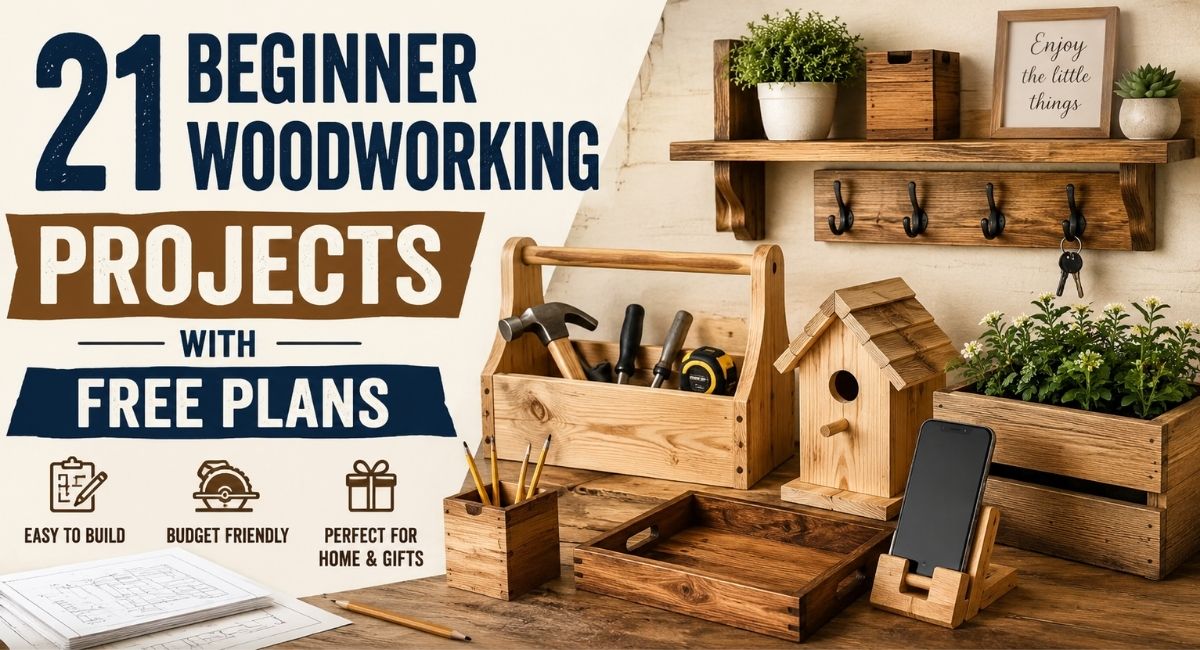
This guide includes 21 Beginner Woodworking Projects that are practical, affordable, and rewarding. Each project is beginner friendly and can be completed with basic tools. Most of them can also be built using free woodworking plans available online or by following the dimensions provided.
Whether your goal is to organize your workspace, decorate your home, or make handmade gifts, these easy woodworking projects will help you build valuable skills without feeling overwhelmed.
If you enjoy practical DIY projects around the home, you may also like this guide on fixing cracks in walls.
Why Beginner Woodworking Is Worth Learning
Woodworking is more than a hobby. It develops practical skills that stay useful for years.
A simple shelf teaches accurate measuring.
A planter box introduces square assembly.
A birdhouse helps you practice drilling and fastening.
Small projects gradually build the confidence needed for larger furniture.
Besides saving money, woodworking allows you to customize projects exactly how you want them. Instead of purchasing generic furniture, you can create pieces that perfectly fit your space.
Many beginners are surprised to discover how relaxing woodworking becomes. Measuring carefully, cutting accurately, sanding smooth surfaces, and applying a finish creates a satisfying process that rewards patience.
The best part is that you do not need a professional workshop. A garage, backyard, or even a small corner of your home can become a productive workspace.
Basic Tools Every Beginner Should Own
Before starting your first project, invest in a few reliable tools instead of buying everything at once.
| Tool | Purpose |
| Tape Measure | Accurate measurements |
| Speed Square | Marking 90 degree lines |
| Circular Saw | Straight cuts in boards |
| Jigsaw | Curved cuts and shapes |
| Power Drill | Drilling holes and driving screws |
| Random Orbital Sander | Smooth finishes |
| Clamps | Holding pieces together |
| Safety Glasses | Eye protection |
| Hearing Protection | Reduces noise exposure |
| Carpenter Pencil | Clear layout marks |
Brands such as DeWalt, Makita, Bosch, Milwaukee, and Ryobi all produce beginner friendly tools. Buying quality tools often saves money over time because they last longer and perform more consistently.
Keeping your tools organized also improves efficiency. Many hobbyists use small storage racks or pegboards to keep everything within reach.
Choosing the Right Wood
One of the biggest mistakes beginners make is purchasing expensive hardwood before learning basic techniques.
Start with affordable materials such as:
Pine
Pine is inexpensive, easy to cut, and forgiving. It is excellent for indoor furniture and practice projects.
Poplar
Poplar has a smoother grain and paints beautifully, making it popular for painted furniture.
Plywood
Plywood offers strength and stability while keeping costs low. Many shelving projects use plywood panels.
Cedar
Cedar naturally resists insects and moisture, making it ideal for outdoor DIY wood crafts like planter boxes and birdhouses.
Essential Safety Tips Before You Start
Good woodworking habits begin with safety.
Always inspect boards for nails or screws before cutting.
Wear eye protection whenever using power tools.
Secure wood with clamps instead of holding it by hand.
Measure twice before making each cut.
Allow blades to stop completely before setting tools down.
Keep your workspace clean to avoid tripping hazards.
These simple habits reduce mistakes and help every project turn out better.
1. Simple Wooden Plant Stand
Skills You’ll Learn
- Measuring
- Straight cuts
- Basic assembly
- Sanding
A wooden plant stand is one of the easiest wood project ideas for beginners. It requires only a few boards, screws, and wood glue.
The design can be as simple as four legs with a square top. Once assembled, sand every surface until smooth before applying stain or paint.
This project teaches accurate cutting because uneven legs immediately become noticeable.
Estimated build time is about two hours.
2. Rustic Floating Shelf
Floating shelves are practical and look impressive despite being relatively easy to build.
Materials
- Pine board
- Shelf brackets
- Wood screws
- Sandpaper
- Wood finish
Once installed, floating shelves can display books, framed photos, plants, or decorative pieces.
They also introduce beginners to wall mounting and level installation.
If you’re organizing your workshop or home office, combining shelves with practical productivity habits can make a big difference. This article on best free productivity apps offers useful ideas for planning DIY projects and keeping material lists organized:
3. Wooden Serving Tray
A serving tray makes an excellent handmade gift.
It involves:
- Cutting side rails
- Joining corners
- Installing handles
- Applying food safe finish
You can personalize it by engraving family names or adding decorative metal handles.
Because the cuts are straightforward, this project is ideal for beginners practicing clean assembly.
4. Birdhouse
A birdhouse remains one of the most popular easy woodworking projects because it introduces multiple beginner skills without requiring advanced joinery.
Skills Practiced
- Measuring
- Angled roof cuts
- Drilling entrance holes
- Nailing panels together
Different bird species require different entrance hole sizes, so checking recommendations from the National Audubon Society before building can help create a safe habitat for local birds.
A cedar birdhouse can last many years outdoors with minimal maintenance.
5. Wooden Pencil Holder
Small projects build confidence quickly.
A pencil holder requires only a few small pieces of wood and teaches accurate gluing and finishing.
You can experiment with:
- Walnut stain
- White paint
- Burned wood finish
- Rounded edges
- Decorative engraving
Even leftover wood scraps can become attractive desk organizers.
6. Entryway Coat Rack
A wall mounted coat rack combines usefulness with attractive design.
Materials include:
- Pine board
- Decorative hooks
- Wood screws
- Wall anchors
- Wood stain
Spacing the hooks evenly helps improve measuring accuracy.
You can also personalize the board with painted lettering or engraved family names.
7. Small Storage Crate
Storage crates are useful throughout the house.
They work well for:
- Children’s toys
- Gardening supplies
- Firewood
- Kitchen storage
- Pantry organization
This project teaches repetitive cutting and square assembly.
Once finished, adding rope handles makes carrying easier while giving the crate a rustic appearance.
8. Wooden Step Stool
A sturdy step stool is one of the most practical beginner carpentry projects.
It introduces stronger construction methods because the finished piece must safely support body weight.
Materials
- Two by two lumber
- Pine boards
- Wood screws
- Wood glue
- Sandpaper
Double check every measurement before assembly.
After sanding, apply several coats of polyurethane for durability.
For families interested in practical home improvement projects, combining handmade furniture with affordable smart home upgrades can improve both function and comfort. You may enjoy reading about how to set up a smart home on a budget here.
Common Mistakes Beginners Make
Even simple projects can go wrong if you rush through the basics. Here are a few mistakes that almost every new woodworker encounters:
- Cutting before confirming measurements.
- Using dull saw blades, which can splinter wood and make cuts less accurate.
- Skipping sanding between finish coats.
- Overdriving screws until the wood splits.
- Ignoring wood grain direction when sanding.
- Choosing the wrong type of screws for outdoor projects.
Remember that every mistake is part of the learning process. Even experienced woodworkers occasionally remake a part to achieve a better result.
9. Wall Mounted Key Holder
A wall mounted key holder is one of those Beginner Woodworking Projects that solves an everyday problem while helping you practice precision. Instead of searching for misplaced keys every morning, you can create a dedicated storage spot that also adds character to your entryway.
Materials
- Pine or poplar board
- Small metal hooks
- Wood screws
- Sandpaper
- Wood stain or paint
- Picture hanging hardware
Skills You’ll Practice
- Measuring equal spacing
- Drilling pilot holes
- Installing hardware
- Sanding and finishing
A simple design includes a rectangular backboard with four or five hooks. If you want a decorative touch, round over the edges with sandpaper or a router and stencil your family name or a welcoming message across the top.
This project usually takes less than two hours, making it ideal for a weekend afternoon.
10. Wooden Bookends
Bookshelves often need sturdy bookends, and making your own is much easier than many beginners expect.
This project introduces right-angle assembly, accurate cutting, and finishing techniques.
Materials
- Hardwood or pine
- Wood glue
- Finish nails or screws
- Sandpaper
- Paint or stain
L-shaped bookends are simple to build using two pieces of wood joined together securely. Adding felt pads underneath protects shelves from scratches.
You can personalize them with initials, geometric patterns, or engraved quotes to create thoughtful handmade gifts.
11. Simple Picture Frame
A handmade picture frame is an excellent way to improve cutting accuracy.
Unlike larger furniture pieces, picture frames require careful attention to corners and alignment.
Skills Learned
- Measuring precisely
- Cutting matching lengths
- Gluing corners
- Clamping assemblies
- Applying an even finish
For your first frame, straight butt joints work perfectly well. As your confidence grows, you can experiment with mitered corners using a miter saw.
Picture frames are also a great way to use leftover wood from larger DIY wood crafts, reducing waste while creating something meaningful.
12. Laptop Stand
A wooden laptop stand combines functionality with modern design. It raises your screen to a more comfortable viewing height, helping improve posture during long work sessions.
Materials
- Plywood or hardwood
- Wood glue
- Screws
- Sandpaper
- Clear polyurethane
Many beginner designs use only a few angled pieces that interlock without complicated joinery.
Why It Is Worth Building
- Improves workspace ergonomics
- Keeps laptops cooler with better airflow
- Looks more attractive than plastic stands
- Makes an excellent handmade gift
If you’re creating a productive workspace, pairing your DIY desk accessories with the best Chrome extensions to boost productivity can help you stay organized while working.
13. Wooden Candle Holder
Small decorative projects are perfect for practicing finishing techniques.
A wooden candle holder can be rustic, modern, or farmhouse inspired depending on the finish you choose.
Skills You’ll Practice
- Measuring
- Drilling large holes with a Forstner bit
- Sanding curved edges
- Applying stain evenly
Always use proper metal candle cups or glass inserts for real candles. Never place open flames directly against unfinished wood.
Battery powered LED candles are another safe option if the holder will be used indoors.
14. Garden Planter Box
A planter box introduces outdoor woodworking techniques while producing something useful for your patio, porch, or backyard.
Cedar remains one of the best materials because it naturally resists moisture and insects without requiring chemical treatment.
Materials
- Cedar boards
- Exterior screws
- Wood glue
- Landscape fabric
- Exterior wood finish
Tips for Success
Leave small drainage gaps between the bottom boards.
Pre-drill screw holes to reduce splitting.
Line the inside with landscape fabric before adding soil.
A planter box can hold flowers, herbs, vegetables, or small shrubs. Building several matching boxes creates an attractive outdoor display.
15. Shoe Storage Rack
A shoe rack teaches repetition and consistency because each shelf must be installed at the same height.
It is also one of the most practical wood project ideas for busy households.
Benefits
- Reduces entryway clutter
- Keeps shoes organized
- Can be customized for available space
- Costs significantly less than many store-bought alternatives
Most beginner versions require only straight cuts, screws, and wood glue.
For families, a three-tier design usually provides enough storage for everyday footwear.
16. Basic Side Table
A simple side table is often the first piece of furniture many new woodworkers build.
Although slightly more advanced than previous projects, it combines many of the skills learned from earlier builds.
Materials
- Pine boards
- Wood screws
- Wood glue
- Pocket hole jig, optional
- Sandpaper
- Wood finish
Skills Developed
- Building square frames
- Attaching table legs
- Strengthening joints
- Applying smooth finishes
Keep the design simple. A square tabletop with four straight legs is enough to create an attractive and functional piece.
As your confidence grows, you can experiment with drawers, shelves, or decorative trim.
Improving Your Woodworking Skills Faster
Completing projects is only part of becoming a better woodworker. Developing good habits is equally important.
Practice Measuring Carefully
The old saying “measure twice, cut once” has survived for generations because it works.
Even experienced carpenters double-check measurements before making expensive cuts.
Take a few extra seconds to verify dimensions. Doing so saves both time and materials.
Sand More Than You Think You Need To
Many beginners rush through sanding because it seems repetitive.
In reality, sanding has one of the biggest impacts on the final appearance.
A smooth finish makes inexpensive pine look far more professional.
Start with coarse grit paper to remove saw marks, then gradually move to finer grits before staining or painting.
Buy Better Tools Slowly
It can be tempting to purchase an entire workshop immediately.
Instead, upgrade tools one at a time as your skills improve.
For example:
- Start with a reliable drill.
- Add a circular saw.
- Purchase a quality random orbital sander.
- Upgrade to a miter saw when building furniture.
- Invest in clamps whenever they go on sale.
High-quality tools often produce cleaner cuts, better accuracy, and longer service life.
Choosing the Right Fasteners
Different projects require different fasteners.
| Fastener | Best Use | Suitable for Beginners |
| Wood Screws | Furniture and shelves | Yes |
| Finish Nails | Decorative trim | Yes |
| Brad Nails | Small decorative projects | Yes, with a nailer |
| Pocket Hole Screws | Furniture assembly | Yes |
| Exterior Deck Screws | Outdoor projects | Yes |
Using the correct fastener improves strength and reduces the chance of splitting wood.
Build Confidence One Project at a Time
Many beginners compare their first projects to handcrafted furniture made by experienced professionals.
That comparison often leads to disappointment.
Instead, compare each project with the one you built before it.
Notice improvements in:
- Straighter cuts
- Better sanding
- Cleaner finishes
- More accurate measurements
- Stronger joints
These small improvements add up surprisingly quickly.
Even professional furniture makers started with simple boxes, shelves, and stools before tackling complex cabinets or dining tables.
17. Wooden Phone Stand
A wooden phone stand is one of the quickest easy woodworking projects you can complete. It requires very little material, making it perfect for using leftover wood scraps from previous builds.
A basic design consists of a solid wood block with an angled slot that securely holds a smartphone. More advanced versions include a charging cable channel underneath so the phone can remain plugged in while resting on the stand.
Materials
- Hardwood or pine offcuts
- Sandpaper
- Wood finish
- Felt pads, optional
Skills You’ll Practice
- Measuring small dimensions
- Making accurate angled cuts
- Sanding edges smoothly
- Applying a clean finish
These stands make thoughtful gifts because they are practical and easy to personalize with initials, engraved names, or decorative finishes.
18. Wooden Wall Shelf with Hooks
This project combines storage and organization in one compact design. It is perfect for entryways, kitchens, laundry rooms, or workshops.
The shelf provides space for small decorations or storage baskets, while the hooks below hold coats, bags, hats, or towels.
Materials
- Pine board
- Decorative hooks
- Wall mounting hardware
- Wood screws
- Sandpaper
- Paint or stain
Skills Developed
- Building square assemblies
- Mounting hardware
- Installing wall fixtures
- Finishing exposed surfaces
This project also teaches you to think about weight distribution and proper wall installation using studs or suitable wall anchors.
19. Wooden Magazine Rack
A magazine rack is another useful addition to your collection of DIY wood crafts. It helps organize newspapers, magazines, notebooks, or even vinyl records depending on the design.
Many beginner versions feature two side panels connected by horizontal supports. The simple construction makes it ideal for practicing symmetry and alignment.
Benefits
- Reduces clutter
- Improves woodworking accuracy
- Uses inexpensive lumber
- Looks attractive in living rooms or home offices
You can customize the finish to match your existing furniture, whether you prefer natural wood grain, painted surfaces, or a rustic farmhouse appearance.
20. Small Outdoor Bench
Once you’ve completed several smaller projects, you’re ready to build a basic outdoor bench.
Although larger than earlier builds, the design remains beginner friendly because it relies on straightforward construction techniques.
Materials
- Pressure treated lumber or cedar
- Exterior wood screws
- Waterproof wood glue
- Sandpaper
- Outdoor wood sealant
Skills You’ll Practice
- Building strong structural frames
- Reinforcing joints
- Checking for square during assembly
- Applying weather resistant finishes
Keep the design simple with straight legs and a rectangular seat. Decorative details can always be added later as your skills improve.
A well-built outdoor bench can provide years of service with occasional maintenance.
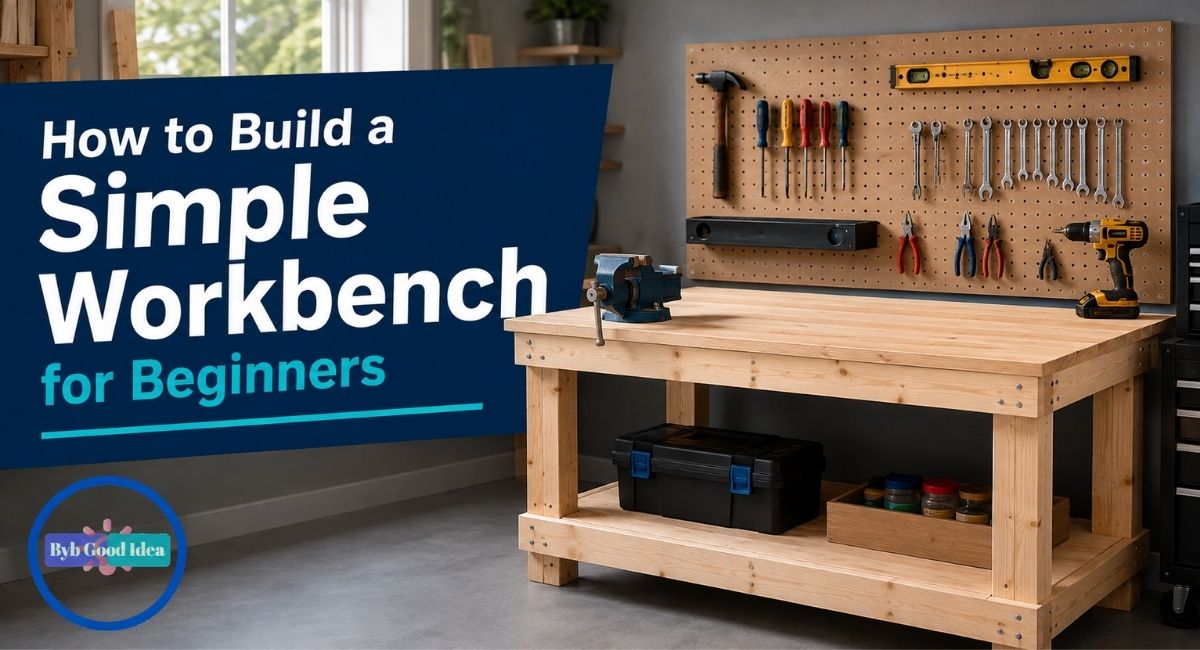
21. Basic Workbench
Every woodworker eventually benefits from having a dedicated workbench.
Building your own workbench may sound challenging, but a beginner version is surprisingly straightforward.
Why Build One?
A sturdy workbench creates a stable surface for nearly every future woodworking project.
It also allows you to clamp boards securely while cutting, sanding, drilling, or assembling.
Materials
- Construction grade lumber
- Plywood top
- Wood screws
- Wood glue
- Heavy-duty casters, optional
Features to Include
- Thick tabletop
- Lower storage shelf
- Strong legs
- Flat working surface
- Optional tool rack
Don’t worry about making your first workbench perfect. Many experienced woodworkers improve theirs over time by adding storage, vises, or upgraded tops.
Building a workbench marks an important milestone because it supports every future woodworking project you undertake.
Where to Get Free Woodworking Plans
Using reliable woodworking plans makes every project easier, especially when you’re still learning.
Look for plans that include:
- Material lists
- Cut diagrams
- Step by step assembly instructions
- Hardware requirements
- Measurements
- Clear illustrations or photos
Avoid plans that skip measurements or assume advanced woodworking knowledge.
Well-written plans reduce mistakes and help beginners develop better building habits.
For trusted free woodworking plans and educational resources, the Woodworkers Guild of America offers articles, project ideas, and instructional content suitable for beginners and experienced builders alike.
How to Make Your Projects Look More Professional
Professional-looking projects are rarely the result of expensive tools alone. Attention to detail makes the biggest difference.
Round Over Sharp Edges
Lightly sanding or routing exposed edges creates a smoother, more comfortable finish.
Fill Screw Holes
Wood filler helps hide visible fasteners before painting or staining.
Sand Between Finish Coats
Allow each coat of finish to dry completely before lightly sanding with fine-grit sandpaper.
This creates a noticeably smoother surface.
Keep Grain Direction Consistent
Whenever possible, sand in the direction of the wood grain.
This minimizes visible scratches and produces a cleaner appearance.
Choose Quality Hardware
Replacing inexpensive hinges, handles, or hooks with better hardware often makes a simple project feel much more premium.
Common Beginner Questions
Should I buy expensive tools first?
No. Start with reliable essentials and upgrade as your skills grow. A quality drill, circular saw, measuring tools, and sander are enough for many beginner projects.
Is pine good enough for furniture?
Yes. Pine is affordable, easy to work with, and widely recommended for beginners. Once you’re comfortable with basic techniques, you can experiment with hardwoods like oak or maple.
Should I stain or paint my projects?
That depends on the wood and your preferred style.
Paint hides imperfections and works well on pine or poplar.
Stain highlights the natural grain, making it a popular choice for rustic or traditional furniture.
How long does it take to improve?
Most beginners notice significant improvements after completing five to ten small projects.
The more you practice measuring, cutting, and assembling, the faster your confidence grows.
What is the biggest mistake beginners make?
Trying to build large furniture too early.
Starting with smaller wood project ideas helps you master essential techniques before tackling more advanced builds.
Final Thoughts
Woodworking is a skill that grows with every completed project. Your first shelf may not be perfect, and your first planter box might have a few uneven joints, but every build teaches something valuable. Over time, you’ll measure more accurately, cut more confidently, and finish projects with greater precision.
The 21 projects in this guide are designed to help you progress naturally. They begin with simple builds that strengthen fundamental skills and gradually introduce more advanced techniques without becoming overwhelming. By following quality woodworking plans, choosing the right materials, and practicing patiently, you’ll build both useful household items and lasting confidence.
Remember that craftsmanship comes from consistency rather than speed. Focus on safe tool use, careful measurements, and attention to detail. Those habits will serve you well whether you’re creating a small decorative piece or tackling larger furniture projects in the future.
If you enjoy practical DIY guides, home improvement ideas, and beginner-friendly technology tips, visit BYB Good Idea for more helpful content. You might also find these resources useful:
Whether your next project is a simple birdhouse or your first workbench, the most important step is getting started. Pick one project, gather your tools, and enjoy the satisfaction of building something with your own hands.