
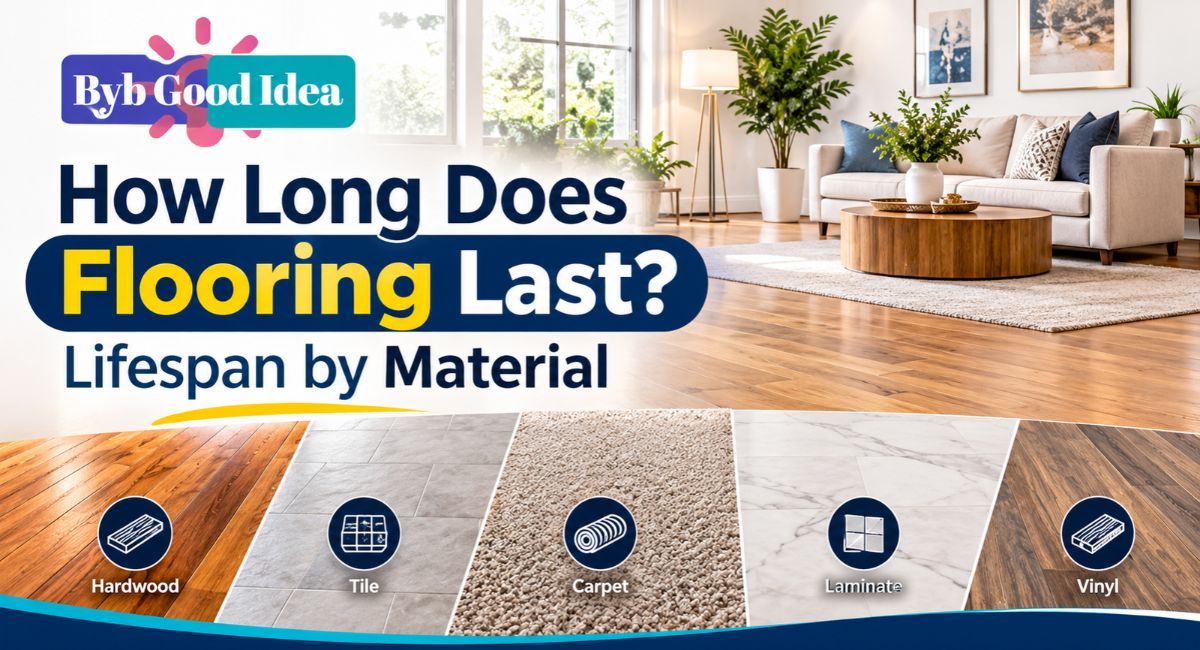
You are standing in a house you just bought. The floors look fine, but the listing photos were taken years ago. Is that carpet nearly done? Will the laminate in the hallway last another decade? Or should you save money now for a full replacement?
Every flooring type has a service life. The problem is that the numbers you see online range from careful to wild. One site says vinyl plank lasts 10 years. Another says it lasts forever. Both can be “right” depending on what they measure.
This guide keeps the numbers honest. Each range below is tied to a named source, such as the National Association of Home Builders (NAHB), the National Wood Flooring Association (NWFA), or typical manufacturer warranty terms. Where no trade body publishes a figure, the guide says so instead of making one up. You will also see what shortens the life of each material, the warning signs that a floor is finished, and a simple decision tree for choosing between refinishing and replacing.
What “Lifespan” Really Means
Before you read any number, know what it measures. Three different ideas get mixed together.
Physical life. This is how long the material survives before it fails, such as boards that rot or tiles that crack. Solid wood and ceramic tile can last for generations on this measure.
Useful life. This is how long the floor looks and works the way you want. A floor can be structurally sound and still be worn through, stained or outdated.
Warranty length. This is how long the maker will cover defects. A warranty is a legal promise, not a forecast. Many floors come with a “limited lifetime residential” warranty, but the fine print often excludes normal wear, water damage and improper installation.
Most lifespan figures you see in guides are averages. The NAHB life expectancy study, for example, reports averages across brands and models. The figures can represent the point where replacing becomes more cost-effective than repairing. They are not guarantees for your floor.
Also, floors do not age in a vacuum. A floor in a quiet guest room can outlast the same product in a busy kitchen by many years. The numbers below describe typical homes with normal care. Your results will vary.
Lifespan by Material: A Sourced Table
This table shows the ranges that trade bodies, industry studies and manufacturers publish. The “Source” column tells you where each range comes from. The last column notes the main things that shorten life.
| Material | Typical lifespan range | Source of the range | What shortens it |
| Solid hardwood | 100 years or more | NAHB life expectancy study (wood flooring) | Repeated flooding, pet urine, thin remaining wood after many sandings, dry indoor air that causes gaps |
| Engineered hardwood | 50 years or more for a good product | Home inspector life expectancy chart, based on industry data. NWFA says wear layer thickness is the key limit | Thin wear layer, water exposure, delamination, too many refinishes |
| Luxury vinyl plank (LVP) | No trade body figure. Makers often give “limited lifetime residential” warranties. Retail guides estimate shorter real-world use that depends on wear layer | Manufacturer warranty terms and retailer guides (not an independent study) | Thin wear layer, heavy traffic, grit, sun fading, subfloor flaws, standing heat |
| Vinyl (general category) | About 50 years | NAHB life expectancy study (vinyl) | Cuts and gouges, adhesive failure, curling from moisture, outdated look |
| Laminate | 15 to 25 years | NAHB life expectancy study (laminate) | Water at the edges, wear-through of the printed layer, click joint failure |
| Ceramic or porcelain tile | 75 to 100 years | NAHB life expectancy study (tile), reported as roughly 70 to 100 years in some summaries | Cracked substrate, failed grout, loose tiles, impact damage |
| Natural stone | 100 years or more | NAHB life expectancy study (marble, slate, granite) | Etching from acids, sealer failure, cracks from movement |
| Carpet | 8 to 10 years for average quality | NAHB life expectancy study (carpet) | Heavy traffic, pets, spills, poor padding, lack of vacuuming |
A few notes on how to read this table.
First, the NAHB numbers come from a study of home components that is more than a decade old. Products have changed since then. Use it as a baseline, not as a prediction.
Second, “vinyl” in the NAHB study mostly refers to older sheet and tile products. Modern luxury vinyl plank has a different build. There is no independent body that publishes a standard lifespan for it. That is why this guide does not give a single number for LVP. A wear layer and a warranty are the best clues you have.
Third, engineered hardwood does not have one NAHB figure in the sources checked for this guide. The 50-year-plus range comes from a home inspector’s life expectancy chart. Treat it as a ceiling for well-made products. The wear layer determines how many refinishes you get, and that matters more than any headline number.
Solid Hardwood: The Longest Lifespan
Solid wood is the benchmark. The NAHB study lists wood flooring at 100 years or more. That figure reflects what the material can do when it stays dry and gets refinished as needed.
The key idea is that the floor can be renewed. Sanding and refinishing removes the worn top surface and exposes fresh wood. The number of times you can do it depends on several factors. According to NWFA’s publication, Hardwood Floors magazine, those factors include the type of wood, the thickness of the wear layer, the skill of the contractor, the flatness of the floor and the equipment used. You can read that guidance in this NWFA article on how many times a wood floor can be sanded.
What shortens the life of solid hardwood
- Water. A single flood or a long leak can cup, buckle or stain boards. Standing water is the biggest threat.
- Pet urine. It soaks into the grain and can darken the wood. Deep stains may need board replacement.
- Too many sandings. Each refinish removes material. A floor that has been sanded repeatedly may have little wood left above the nails or the tongue.
- Humidity swings. Wood expands and contracts. Dry winters can open gaps. Damp summers can cause cupping.
- Poor installation. Loose boards and an uneven subfloor lead to movement and noise. If your boards creak, the guide to fixing squeaky wood floors shows what you can do before it becomes a bigger problem.
A realistic example
A family buys a 1950s house with original oak floors. The surface finish is dull and scratched, but the boards are solid. A refinish brings them back. The floors might have been sanded once or twice in the past 70 years. They can probably take at least one more. That is how a floor reaches 100 years.
If you are weighing hardwood against other choices, the cost to install hardwood flooring is worth reviewing. A higher upfront price can look reasonable when spread over decades.
Engineered Hardwood: Lifespan Depends on the Wear Layer
Engineered hardwood has a real wood top layer glued onto a plywood or fiberboard core. That top layer is called the wear layer. It is the part you can sand.
NWFA’s publication states that the thickness of the topmost layer determines whether an engineered floor can be refinished at all. It also notes that the thickness varies by product. The same source mentions a recommended minimum wear layer of 3/32 inch in the lowest areas of the floor as the point to which it would need to be sanded to get flat.
What this means for lifespan
A thin wear layer, such as a paper-thin veneer, cannot be sanded. When it wears through, the floor is done. A thicker wear layer can be sanded, sometimes more than once. The more material you have, the longer the floor can live.
Because there is no single trade body figure for every engineered product, the smartest move is to check the wear layer thickness before you buy. It is usually listed on the box or in the product data sheet. Ask the seller if you cannot find it. Also ask whether the maker states how many times the floor can be refinished.
What shortens the life of engineered hardwood
- Water exposure, which can swell the core or cause the layers to separate.
- A very thin wear layer.
- Aggressive sanding that cuts through the top layer.
- Strong sun, which can fade or darken the wood.
- Poor subfloor prep, which allows movement and gaps.
Luxury Vinyl Plank: Read the Wear Layer and the Warranty
LVP is popular because it resists water, costs less than wood and installs quickly. It is also the category where lifespan claims vary the most.
There is no trade body that publishes an independent lifespan range for LVP. What you do have are two practical clues.
The wear layer. This is the clear top coating that protects the printed pattern. It is measured in mils, which are thousandths of an inch. Retail guides commonly describe 6 mil as light residential, 12 mil as standard residential and 20 mil as heavy residential, with thicker layers used for commercial spaces. These descriptions come from sellers, not from a standards body, but they show how the market ranks products. A thicker wear layer gives the floor more protection against scratches and scuffs.
The warranty. Many LVP products carry a “limited lifetime residential” warranty. The fine print often covers manufacturing defects and sometimes wear-through, but may exclude gouges, pet damage, improper cleaning and moisture from below. Read the terms before you rely on the word “lifetime.”
Some retailer guides publish lifespan estimates that run from roughly one decade up to about two and a half decades, depending on the wear layer and use. Those are estimates from sellers, not from independent testing, and different sellers give different numbers. This guide does not endorse any single figure. A better approach is to match the product to the room and to follow the care steps in the maker’s instructions.
What shortens the life of LVP
- Thin wear layer in a busy room. Kitchens and entryways wear the surface faster.
- Grit and abrasives. Sand and dirt act like sandpaper. Mats and regular sweeping help.
- Dragging furniture or sharp objects. These can cut through the wear layer.
- Heat and sun. Direct sun through large windows can fade or warp planks. Some makers also warn against placing hot items on the floor.
- Moisture from below. A damp slab can cause problems, even with a waterproof core.
- Uneven subfloors. Click joints can crack when the floor flexes. Fixing the subfloor first prevents this.
If you already have burn marks or scorch damage, see this guide on burn marks on vinyl plank flooring. Spot repairs are often possible when the plank locks allow it.
Laminate: A Shorter Life, Often a Fair Price
Laminate has a photographic layer on top of a fiberboard core. The surface is tough, but the core does not like water.
The NAHB study lists laminate at 15 to 25 years. Several other summaries repeat that range. That is a useful baseline for typical homes.
Laminate durability is often described using an AC rating. AC stands for abrasion class. It is a European scale that tests how well the surface resists wear, impact and scratches. Higher numbers mean tougher surfaces. Many makers match their warranty length to the AC rating, and warranties of 15 to 30 years appear in retail listings. Again, a warranty is not a lifespan forecast, but a longer warranty often signals a more durable product.
What shortens the life of laminate
- Water at the edges. Spills that sit can swell the core and lift the plank edges. This damage is hard to reverse.
- Wear-through. In heavy traffic areas, the printed layer can wear off and show the core.
- Click joint failure. Joints can open or break when the subfloor is uneven.
- Humidity swings. Laminate expands and contracts. Gaps or peaking can show up at joints.
- Cleaning mistakes. Soaking the floor with a wet mop is a common way to ruin it.
Unlike hardwood, laminate cannot be sanded or refinished. When the surface is worn, replacement is the only fix. If you are still choosing between materials, the comparison of laminate vs vinyl vs LVP flooring lays out the trade-offs.
Tile and Stone: Very Long Life, With a Catch
The NAHB study lists tile at roughly 70 to 100 years, and natural stone such as marble, slate and granite at 100 years or more. Ceramic and porcelain tile are hard, stable and resist water.
The catch is that tile is only as good as what sits beneath it. The tile may last a century, but the grout, the thin-set mortar and the substrate may not.
What shortens the life of tile
- Substrate movement. A floor that flexes will crack tiles and grout. Joist spacing and subfloor stiffness matter.
- Grout failure. Grout can crumble, stain or let water through. Regrouting is a common maintenance task.
- Impact. A dropped cast iron pan can chip or crack a tile.
- Poor installation. Voids under tiles lead to cracking. Missing expansion joints can cause lifting.
- Acids on natural stone. Lemon juice, vinegar and some cleaners can etch polished marble.
A cracked tile can often be replaced without redoing the entire floor. That is one reason tile can reach very long service lives.
Carpet: The Shortest Life of the Group
The NAHB study lists average quality carpet at 8 to 10 years. Higher grade carpets may last longer. Lower grade carpets may fail sooner.
Carpet wears in a different way from hard floors. Fibers flatten and tangle. Dirt builds up in the pile. Padding compresses. Stains can set. Odors can sink into the underlay.
What shortens the life of carpet
- Heavy traffic. Hallways and stairs show wear first.
- Poor padding. A thin or cheap pad lets the carpet flex more, which wears the fibers.
- Dirt and grit. Embedded grit cuts the fibers from within. Regular vacuuming helps.
- Pets and spills. Urine and food can soak into the backing and pad.
- Sun. Strong light can fade colors.
Small damage can sometimes be fixed. A carpet repair kit can handle burns, snags and small patches. If the whole floor looks tired, replacement is usually cleaner.
Warning Signs Your Flooring Needs Replacing
Averages help, but your floor will tell you more. Look for these signs in each material.
| Warning sign | What it points to | Usually fixable? |
| Wear-through to the core or pattern layer (laminate, LVP) | The protective layer is gone | No, replace the affected planks or the floor |
| Deep gouges or dents in hardwood | Surface damage | Often yes, sand and refinish |
| Cupping, crowning or buckling boards | Moisture problem | Sometimes, if the source is fixed and boards dry flat |
| Swollen edges or lifting joints (laminate) | Water damage | Rarely |
| Cracked tile or hollow sound when tapped | Loose tile or substrate movement | Sometimes, replace tiles and fix the cause |
| Matted, stained or smelly carpet | Fibers and pad are worn or contaminated | Cleaning may help, but replacement is common |
| Floor feels spongy or soft | Subfloor damage or rot | No, repair the structure first |
| Mold or musty smell | Hidden moisture | Fix the source, then replace affected areas |
Treat spongy floors and mold as urgent. They point to structural or health issues, not just worn finish.
Refinish or Replace? A Simple Decision Tree
Use these questions in order. Stop at the first answer that fits.
Step 1: Is the subfloor or structure damaged?
If the floor feels soft, bounces, or you see rot or mold, stop. Repair the subfloor or fix the leak first. No surface fix will last on a damaged base.
Step 2: Is the damage only on the surface?
Surface scratches, dullness and light stains on solid hardwood can usually be fixed by sanding and refinishing. On engineered hardwood, you can refinish only if the wear layer is thick enough. On laminate and LVP, surface wear cannot be sanded away.
Step 3: Is there enough wood left to sand?
For solid wood, check how many times it has been sanded and how much material remains above the tongue and nails. A flooring pro can measure this. NWFA says the number of times a floor can be sanded depends on several factors, including the thickness of the wear layer and the flatness of the floor.
Step 4: Is the damage local or widespread?
A few damaged planks in a floating floor can often be swapped. A single cracked tile can be replaced. If damage covers more than a third of the room, full replacement may be cheaper in labor and give a better match.
Step 5: Is the cost of repair close to the cost of replacement?
If a repair costs most of what a new floor would, replacement usually makes more sense. This is especially true for carpet and laminate.
Step 6: Does the floor still suit your home?
If the style, color or feel no longer fits, and the floor is near the end of its range, replacing is a reasonable choice, even if the floor is not broken.
How to Make Flooring Last Longer
Most floors do not fail from one big event. They wear out from small, repeated damage. A few habits can add years.
Control grit. Put mats at every outdoor door. Sweep or vacuum often. Dirt is the most common cause of surface wear.
Use the right cleaner. Follow the maker’s instructions. Avoid steam mops on wood and laminate unless the maker approves them. Avoid soaking floors with water.
Protect the surface. Add felt pads under furniture legs. Lift heavy items instead of dragging. Use rugs in high-traffic zones.
Wipe spills quickly. Water, pet accidents and food acids cause more damage the longer they sit.
Keep indoor humidity steady. Wood and laminate prefer a stable range. Your flooring maker’s guide usually lists the target. Large swings can cause gaps, cupping or peaking.
Manage sun. Use curtains or window film in rooms with strong direct light.
Trim pet nails. Pets scratch floors. Choose products that suit your household. If pets are part of your life, this guide to the best flooring options for homes with pets can help you pick a floor with the right toughness.
Fix small problems early. A loose board, a chipped tile or a lifting plank gets worse with time. Early repairs cost less than full replacement.
Keep your paperwork. Save the installation instructions, the receipt and the warranty. Many claims are denied because owners cannot show that they followed the maker’s rules.
Real-World Scenarios
Scenario 1: A rental with laminate
A landlord installed mid-grade laminate 14 years ago. Tenants have come and gone. Several planks near the kitchen have swollen edges, and the hallway has worn spots. The floor is within the 15 to 25 year baseline from the NAHB study, but the damage is already visible. Spot repairs would be uneven. Replacing the floor with a more water-resistant product is a sound choice.
Scenario 2: A family home with solid oak
A homeowner has 60-year-old oak floors with dull finish and a few deep scratches. The boards are tight and flat. A refinish gives the floor a fresh surface for far less than the cost of replacement. This fits the NAHB view of wood floors as a very long-lived material.
Scenario 3: A busy kitchen with LVP
A family installs a 12 mil LVP in their kitchen. After several years, the surface near the sink and stove looks hazy and scuffed. Some planks show visible wear. The warranty covers defects, but not normal wear. The family can replace the worst planks if they kept spares, or plan a new floor in the next few years. Next time, they might choose a thicker wear layer for this room.
Your Next Steps
Flooring does not fail on a set date. It wears out in ways you can often see and sometimes slow down. The sourced ranges in this guide give you a starting point. Your habits, your room and your product choice decide where you end up inside those ranges.
Here is a quick plan:
- Identify your flooring type and check the wear layer or grade.
- Find your warranty and care instructions, and keep them in a folder.
- Walk each room and check for warning signs from the table above.
- Use the decision tree to choose between repair, refinishing and replacement.
- Budget ahead for the floors that are closest to the end of their range.
For more clear, practical flooring guides, repair tips and project ideas, keep reading at BYB Good Idea. We write for homeowners who want to make smart choices before they spend.