
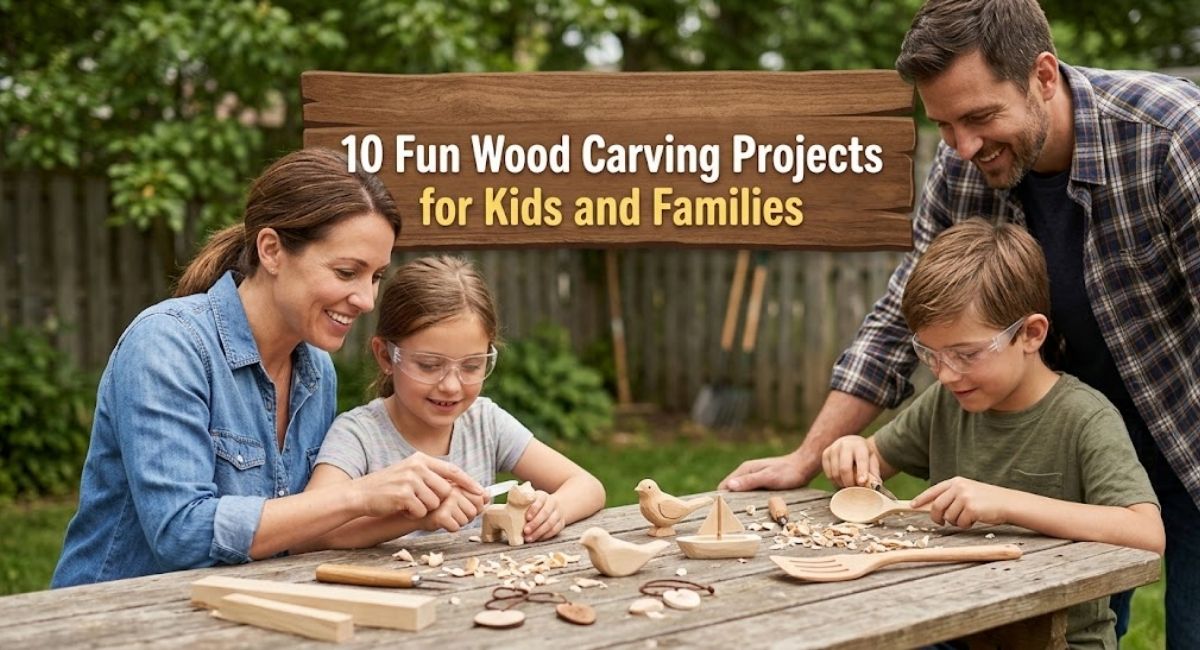
Your kid is bored. Screens are off. You want a weekend activity that does not end in five minutes. You remember carving a bar of soap in scout camp years ago, and you wonder if wood carving could work for your own kids today.
It can. Wood carving is one of the few hobbies that slows kids down without boring them. It also gives the whole family something to do together, at the kitchen table or out on the porch.
This guide covers ten wood carving projects for kids and families. Every project uses safe tools and soft, forgiving wood. You do not need carving experience. You just need a few basic supplies and a bit of patience.
Why Wood Carving Works So Well for Kids
Wood carving teaches patience in a way that feels natural, not forced. A child cannot rush a carving. The wood pushes back if you move too fast, so kids learn to slow down on their own.
It also builds fine motor skills. Holding a whittling knife at the right angle, applying steady pressure, and controlling small movements all strengthen hand coordination. These are the same skills used in writing, drawing, and other detailed tasks.
Carving gives kids a real result they can hold. A finished piece, even a rough one, feels like a genuine accomplishment. That sense of pride tends to build confidence quickly, especially for kids who struggle with subjects that do not produce something physical.
Family carving time also works well because it does not need constant talking. Parents and kids can sit side by side, focused on their own piece, and still feel connected. Many families find this kind of quiet, shared activity brings them closer than a conversation would. If your family already enjoys hands-on activities, our guide to beginner woodworking projects offers a good next step once carving becomes a regular hobby.
Choosing the Right Wood for Kids
Wood choice matters more than most parents expect. The wrong wood turns a fun afternoon into a frustrating one.
Balsa Wood
Balsa wood is the softest common carving wood. It cuts easily, even for younger kids with less hand strength. Balsa is a good starting point for children under ten, or for a first attempt at any age. The tradeoff is durability. Balsa dents and breaks more easily than denser woods, so finished pieces need gentle handling.
Soft Wood Blocks
Pre-cut soft wood blocks, often sold in craft stores, offer a middle ground. They hold detail better than balsa but still cut without much force. Basswood is the most common choice here, since it carves smoothly and has a light, even grain. These blocks work well for kids around ten and up, once they have a bit of knife control.
What to Avoid
Skip dense hardwoods like oak or maple for young beginners. These woods need more force to cut, which increases the risk of the knife slipping. Save harder woods for later, once your child has built real control with softer material. If you want to understand why wood density changes carving difficulty, our post on wood carving for beginners explains grain and hardness in simple terms.
Tools and Safety Gear Every Family Needs
You do not need a full workshop. A small, well-chosen set of tools covers almost every project on this list.
The Whittling Knife
A whittling knife is the main tool for most kid-friendly carving. Look for a knife with a short, fixed blade and a comfortable grip sized for smaller hands. Avoid folding knives for young kids, since the blade can close unexpectedly on fingers. A quality beginner knife should feel light but sturdy, and it should hold an edge without needing constant sharpening. For guidance on picking a first knife, see our roundup of whittling knives for beginners.
Safety Gloves
Safety gloves are not optional for kids. A cut-resistant glove worn on the hand holding the wood protects fingers from slips, which are common while a child is still learning blade control. Many beginner carving kits include gloves, but you can also buy them separately. Choose a glove sized for kids rather than an adult glove worn loosely, since loose gloves reduce grip and control.
Other Basics
A few more items round out your kit. Sandpaper, around 150 to 220 grit, smooths edges after carving. A pencil helps sketch a simple shape before cutting begins. A stable table or workbench keeps the workspace steady, which matters more than people expect when a child is applying pressure with a blade.
Setting Ground Rules Before You Start
A short safety talk before the first cut prevents most accidents. Explain that the knife always cuts away from the body, never toward it. Show your child how to hold the wood so fingers stay behind the blade path. Remind them that gloves stay on the whole time, not just at the start.
According to general child product safety guidance from the Consumer Product Safety Commission, close adult supervision is one of the most effective ways to prevent injuries during hands-on activities with young children. Applying that same principle to carving means staying within arm’s reach for the first several sessions, especially with kids under twelve.
Ten Wood Carving Projects for Kids and Families
Each project below works with balsa wood or soft wood blocks. Start with the simpler shapes and move toward detailed ones as skill grows.
1. Simple Wood Spoon
A basic spoon is one of the most common first projects, and for good reason. It teaches rounding, curved cuts, and hollowing out a small bowl shape. Start with a rectangular balsa block, sketch the spoon outline in pencil, then carve the outer shape before hollowing the bowl.
2. Wooden Keychain
A small rectangular or oval keychain blank is easy to shape and personalize. Kids can round the edges, add a simple carved letter or symbol, then drill a small hole for the key ring, with adult help on the drilling step.
3. Mini Animal Shapes
Simple animal silhouettes, like a fish, bird, or turtle, work well for younger carvers. Keep the shapes rounded rather than detailed. A basic outline carved from balsa gives a satisfying result without needing fine detail work.
4. Wood Slice Name Tags
A thin wood slice, either store bought or cut from a branch with adult help, makes a simple name tag or door sign. Kids can carve or trace letters into the surface, then sand the edges smooth.
5. Carved Wooden Boat
A small toy boat is a classic family project. Start with a soft wood block shaped like a hull, then hollow out a shallow deck area. This project introduces basic hull shaping, which teaches control over curved surfaces.
6. Wooden Spinning Top
A spinning top combines carving with a bit of balance testing. Round a small block into a cone shape, then smooth the point so it spins evenly. Kids enjoy testing their finished top right away, which adds an immediate reward to the project.
7. Simple Wooden Bead
Carving a round or oval bead teaches symmetry and even shaping. Once carved, a hole can be drilled through the center for stringing onto cord or leather, making a simple bracelet or necklace piece.
8. Carved Nature Symbols
Leaves, acorns, and simple flower shapes are good intermediate projects once a child has carved a few simpler items. These shapes introduce shallow relief carving, where some material is removed to create texture without cutting all the way through.
9. Personalized Coaster
A flat wood round or square works well as a coaster base. Kids can carve a simple initial, small pattern, or border design into the surface. This project also pairs naturally with light sanding and a food-safe finish, since coasters get regular handling.
10. Family Ornament Set
For a project the whole family can do together, each person carves a small ornament shape, such as a star, heart, or simple animal. Displayed together, these ornaments make a nice seasonal decoration and a visible record of everyone’s first carving attempts.
Comparing Skill Level Across These Projects
Not every project fits every age or skill level. This table gives a rough guide.
| Project | Best Wood | Skill Level |
| Simple wood spoon | Balsa or basswood | Beginner |
| Wooden keychain | Balsa | Beginner |
| Mini animal shapes | Balsa | Beginner |
| Wood slice name tags | Basswood | Beginner |
| Carved wooden boat | Basswood | Intermediate |
| Wooden spinning top | Basswood | Intermediate |
| Simple wooden bead | Balsa | Beginner |
| Carved nature symbols | Basswood | Intermediate |
| Personalized coaster | Basswood | Beginner |
| Family ornament set | Balsa | Beginner |
Building Skill Over Time
Kids improve fastest with short, regular sessions rather than one long session followed by weeks off. Fifteen to twenty minutes a few times a week builds more consistent skill than a single two hour attempt.
Encourage kids to keep their early pieces, even the rough ones. Comparing an early carving to a later one is one of the clearest ways to show real progress, and it keeps motivation high during the slower learning stage.
As skill grows, some kids naturally get curious about other carving methods. If your family later wants to compare traditional tools with machine options, our breakdown of cnc wood carving vs hand carving explains the differences in plain terms, though hand tools remain the better starting point for young beginners.
Some families also branch into related wood crafts once basic carving feels comfortable. Wood burning, for example, uses many of the same principles around grain and control. Our guide on what is pyrography covers this related hobby if your family wants to add another wood craft skill alongside carving.
Common Mistakes Parents Should Watch For
A few habits cause most early problems. Cutting toward the body instead of away from it is the most common and most dangerous mistake, so this deserves repeated reminders in early sessions. Choosing wood that is too hard for a child’s current strength leads to frustration and increases slip risk. Skipping gloves, even for “just a quick cut,” removes an easy layer of protection. Rushing a project instead of taking breaks tends to reduce focus, which raises the chance of an accidental slip.
Turning Carving Into a Regular Family Habit
A single afternoon of carving is fun, but the real benefit comes from making it a repeated activity. Set a regular time, even once a week, where the family sits down together with wood and tools. Rotate who picks the next project. Let older kids help younger siblings with simple shapes, which reinforces their own skills while building patience.
Displaying finished pieces, even simple ones, gives the activity a visible payoff. A shelf or small basket of finished carvings becomes a quiet record of your family’s progress over months.
FAQs About Wood Carving for Kids
What age can kids start wood carving?
Most kids can start basic carving with close supervision around age eight to ten, using soft wood and a short, dull-edged practice knife. Younger kids can still take part in sanding, sketching designs, or carving very soft balsa with heavy supervision.
Is wood carving safe for children?
It can be safe with the right setup. Soft wood, a properly sized knife, safety gloves, and close adult supervision reduce the main risks. Most injuries happen from cutting toward the body or using wood that is too hard for the child’s strength.
What is the best wood for kids to carve?
Balsa wood is the softest and easiest option for young or first-time carvers. Basswood is a good next step once basic control is in place, since it holds more detail while still cutting easily.
Do kids need special knives for carving?
Yes. A short, fixed-blade whittling knife sized for smaller hands is safer and easier to control than an adult knife or a folding blade. Avoid knives that are too large or heavy for a child’s grip.
How long does a simple carving project take?
Most beginner projects, like a keychain or simple animal shape, take thirty minutes to an hour of active carving time, though total time varies based on the child’s pace and attention span.
Can wood carving help with a child’s focus or motor skills?
Many parents and educators report that carving improves fine motor control and patience, since the activity requires steady hands and careful attention. It is not a substitute for other developmental support, but it is a useful hands-on activity alongside other learning.
Final Thoughts
Wood carving gives families a simple, low-cost way to slow down together. It does not need a workshop, expensive tools, or years of experience. A few soft wood blocks, a proper whittling knife, and a pair of safety gloves are enough to start this weekend.
Begin with the simplest projects on this list, keep sessions short, and let skill build naturally over time. The goal is not a perfect first carving. It is a shared activity that teaches patience, care, and a bit of craftsmanship along the way.
At BYB Good Idea, we build practical guides for families who want hands-on hobbies that actually stick. Browse our other wood craft guides for more beginner-friendly projects, and come back as your family’s carving skills grow.
Helpful resources for getting started:
- A short, fixed-blade whittling knife sized for kids
- Cut-resistant safety gloves in a kid-appropriate size
- Balsa wood blocks or pre-cut basswood shapes
- Fine grit sandpaper for smoothing finished pieces