
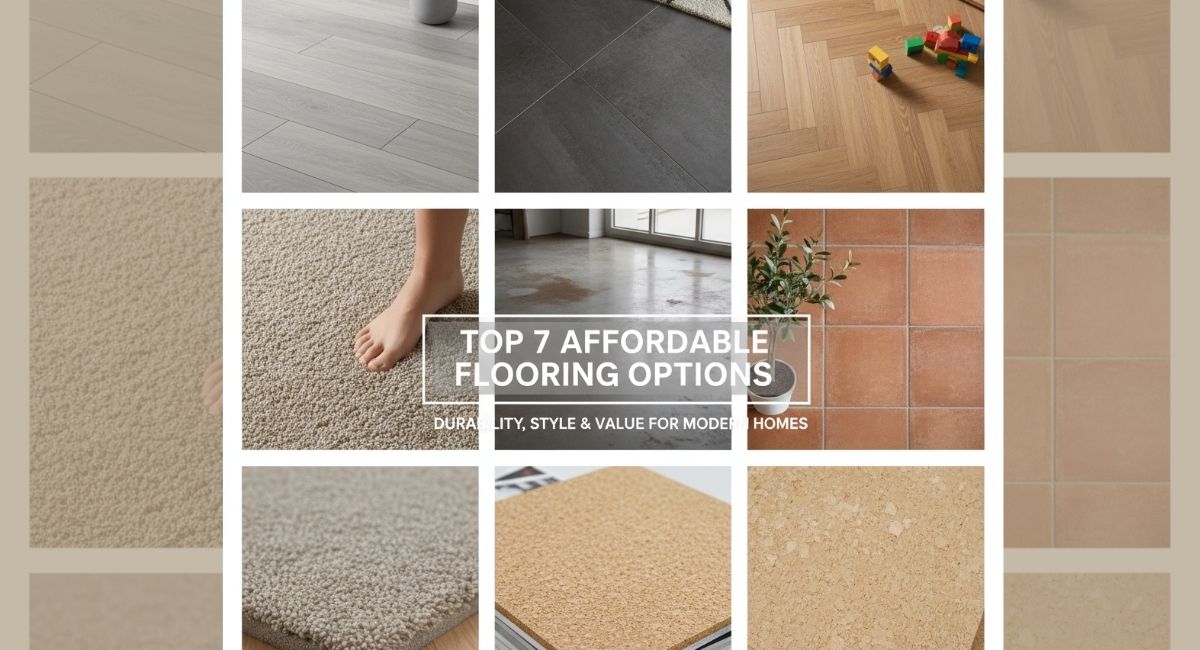
Choosing the right flooring is one of the most impactful decisions you can make when shaping a home’s look and feel. Flooring sets the tone of your interior, influences maintenance and longevity, and plays directly into your budget. As home design trends evolve, there’s strong demand for attractive floors that don’t demand high costs or complicated upkeep. In this extensive guide, we examine seven affordable flooring options that deliver on style, durability, and value. We walk through what makes each type appealing, potential drawbacks, installation considerations, and real-world performance in modern homes.
Understanding What Affordable Flooring Means Today
Before comparing materials, it’s essential to frame what “affordable” means in the context of modern homes. Most homeowners want a balance of cost, lifespan, appearance, and ease of installation. A very cheap floor isn’t always best if it needs replacing quickly or looks dated.
Affordable flooring doesn’t mean cheap quality. Instead, it means smart value — materials that look attractive, perform well under daily use, and fit into a reasonable budget for most households. We focus on options that meet these criteria.
1. Luxury Vinyl Plank (LVP) and Tile (LVT)
One of the most talked-about affordable flooring innovations of the last decade, luxury vinyl floors have transformed how people approach residential spaces. Both plank and tile versions offer realistic visuals that mimic wood, stone, and ceramic at a fraction of the cost.
Luxury vinyl combines a high-definition printed surface with protective wear layers that resist scratches and spills. Because of this construction, LVP and LVT hold up well in kitchens, living rooms, laundry areas, and even basements where moisture can be a concern.
Why Many Homeowners Choose Vinyl
- Lifelike Appearance: Advances in printing have brought textures and visuals that replicate wood grain, slate, marble, and more.
- Comfort Underfoot: Vinyl is softer than ceramic and feels warmer — especially valued in rooms where people stand often.
- Water Resistance: Most options are waterproof, making them a solid choice in bathrooms and entryways.
- DIY-Friendly: Many products use click-lock installation that doesn’t require glue or specialized tools.
From an investment standpoint, quality LVP and LVT can last 10–20 years with proper care. You can explore how this flooring compares with related options in depth in this article on LVP vs LVT which explains subtle differences that help you choose confidently.
Considerations Before You Install
Understanding subfloor conditions is vital. Vinyl installation performs best on even, smooth surfaces. Uneven subfloors can cause clicking systems to feel unstable or lead to premature wear. For insights on preparing floors before installation, resources on underlayment for vinyl flooring are very helpful.
2. Laminate Flooring
Laminate flooring presents another affordable alternative that brings wood-like visuals to budget-conscious spaces. It consists of a fiberboard core with a printed design layer and protective wear surface. Modern laminates have grown more robust and visually appealing than earlier generations.
Laminate is often less expensive than traditional hardwood and sometimes even less than high-end vinyl. It offers a relatively hard surface that resists dents and scratches better than some softer real woods.
Strengths of Laminate
- Cost Efficiency: Laminate usually sits lower in price per square foot while giving the visual richness many homeowners desire.
- Scratch Resistance: Its tough wear layer makes it ideal for busy homes and areas with pets or heavy foot traffic.
- Ease of Maintenance: Sweeping and occasional damp mopping are typically enough.
Things to Know Before Choosing Laminate
Laminate is not inherently waterproof unless explicitly labeled, so areas prone to moisture demand careful consideration. Also, while its looks have improved dramatically, it still can lack some depth and tactile warmth that vinyl or natural wood reproduce.
Laminate floors pair nicely with decorative accents, area rugs, or contrast trims to elevate interior aesthetics, especially in living spaces and bedrooms.
3. Engineered Hardwood
For homeowners who want real wood without the premium price of solid hardwood, engineered hardwood is a popular option. Engineered wood features a thin top layer of real hardwood bonded to plywood panels underneath. This structure stabilizes the material and allows it to resist the expansion and contraction that solid wood often experiences in humid climates.
Engineered hardwood gives authentic wood visuals at a friendlier price point while still carrying most of the warm character and natural variation people love about wood.
What Makes Engineered Hardwood Compelling
- Authentic Material: Because the top layer is real wood, you get genuine grain and texture.
- Better Moisture Tolerance: Compared to solid wood, engineered flooring handles humidity shifts better.
- Refinishing Potential: Some thicker engineered planks can be lightly refinished, extending their lifespan.
How to Choose the Right Engineered Wood
Focus on the species you prefer (oak, maple, hickory, etc.) and the thickness of the wear layer. Thicker wear layers allow for more sanding and refinishing over time. Lighter finishes suit modern interiors, while richer tones can anchor traditional and transitional designs.
Looking for inspiration on wood flooring tones? Articles like dark wood flooring trends can help you narrow down choices.
4. Sheet Vinyl Flooring
Sheet vinyl is another way to get water-resistant, budget-friendly flooring. It comes in large continuous sheets that are glued down or float over prepared subfloors. The seamless appearance and lack of grout lines make sheet vinyl especially useful in areas like bathrooms, laundry rooms, and kitchens.
Vinyl sheets offer diverse patterns, from classic tile visuals to wood-look motifs — at costs often lower than luxury vinyl. Installation can be more involved than click-lock products, but the continuous surface helps keep moisture from penetrating seams.
Benefits at a Glance
- Low Cost: Sheet vinyl is often among the most affordable flooring materials.
- Hygienic and Easy to Clean: A continuous surface means fewer edges where dirt and bacteria can hide.
- Versatile Designs: From subtle neutrals to bold stone impressions, you have many choices.
Sheet vinyl’s durability depends on product quality and wear layer thickness. Premium sheet vinyl can withstand foot traffic and resist abrasion well, making it a sensible choice for family spaces.
If you want a broader view on sheet vinyl and how it compares with other options, this article covers key differences.
5. Ceramic or Porcelain Tile
Tile remains a go-to choice for homeowners seeking long-lasting, affordable floors in specific areas of the home. While installation tends to be more labor-intensive, tile prices can be very reasonable when you choose standard sizes and common finishes.
Both ceramic and porcelain tiles offer moisture resistance, making them ideal for bathrooms, mudrooms, and kitchens. Porcelain is typically denser and more water-resistant than ceramic, but both types can be budget-friendly and long-lived.
Tile Strengths for Modern Homes
- Exceptional Durability: Tiles resist wear, scratches, and staining better than many alternatives.
- Water and Spill Resistance: Ideal for wet areas.
- Design Variety: Tiles span countless colors, shapes, and finishes.
Things to Consider
Installation quality matters a lot with tile. Poorly laid tile can crack or grout lines can discolor over time. Budget for professional installation or invest time learning proper techniques if installing yourself.
When mixing tile with wood-look floors or transitioning in open plan spaces, planning layout transitions enhances cohesion and flow.
6. Cork Flooring
Cork may not be as ubiquitous as vinyl or wood, but it’s a smart choice for homeowners looking for softness underfoot, natural insulation, and an eco-friendly material. Cork flooring comes in tiles or planks and is made from the bark of cork oak trees.
Cork’s cellular structure provides warmth, sound absorption, and some degree of bounce that makes walking or standing for long periods more comfortable.
Why Cork Appeals
- Comfort and Warmth: It’s softer and warmer than ceramic or stone.
- Acoustic Benefits: Good at reducing noise between floors.
- Sustainability: Cork harvesting is renewable and minimally invasive.
Practical Considerations
Cork does require sealing to protect against moisture and stains. In high-moisture areas, extra care is necessary to prevent warping or discoloration. Homes with pets also need good sealants to avoid denting.
Cork’s visual appeal comes from its natural patterning — which can feel organic and warm in casual and modern interiors alike. It pairs beautifully with area rugs and complementary wood tones.
7. Painted and Sealed Concrete
One of the most overlooked flooring options in modern homes is simply existing concrete that’s been painted and sealed. For homes with a slab foundation, it can be the most affordable durable surface available.
Concrete floors already exist in many garages, basements, and even some living spaces in contemporary designs. By preparing the surface, applying quality floor paint, and sealing with protective coatings, homeowners can create floors that are long-wearing, easy to clean, and stylish.
Benefits of Concrete Finishes
- Lowest Material Costs: If the slab floor is already present, upgrades can be very inexpensive.
- Durable and Easy to Maintain: Well-sealed concrete resists stains and holds up to traffic.
- Design Flexibility: Stains, stencils, and coatings allow endless custom looks.
Before committing to this option, test for moisture and ensure the concrete is in good condition. Surface preparation is critical because paint and sealers adhere best to clean, stable surfaces.
For insights on preparing concrete and flooring coatings, see guides like how much does it cost to epoxy a garage floor which offers essential background on coatings and durability.
Comparing These Options for Real-World Use
All flooring types have strengths and ideal scenarios. Here’s a practical comparison to help you weigh choices with everyday use in mind.
Durability Under Daily Life
- High Traffic Areas: Luxury vinyl and tile stand out because they resist abrasion and spills.
- Moisture-Prone Spaces: Sheet vinyl, tile, and well-sealed concrete are more water-tolerant.
- Quiet Comfort: Cork and engineered wood feel warmer and softer underfoot.
Maintenance and Upkeep
- Vinyl and laminate are easy to clean with sweeping and occasional damp mopping.
- Tile grout may need periodic resealing to avoid discoloration.
- Cork and wood floors require special cleaners that preserve their finish.
Long-Term Value
- Tile and concrete can last decades with minimal renewal costs.
- Engineered wood and quality vinyl hold their value over years with proper care.
Budgeting for Affordable Flooring
When calculating costs, consider both material and installation. DIY installation can reduce expenses significantly, but complex patterns or moisture mitigation often benefit from professional installers.
Material Cost Ranges (General Estimates)
- Sheet Vinyl: Often the lowest per-square-foot cost.
- Laminate and Vinyl: Mid-range prices with strong performance.
- Tile and Engineered Wood: Variable; budget lines can be affordable, but premium options raise the price.
Installation also plays into the total. Tile and concrete preparation may require tools and labor that add to the budget. Products with floating systems tend to be easier for DIY installation.
Installation Tips That Save Time and Money
- Check Subfloor Level: Many floors perform better on flat, stable surfaces.
- Allow Materials to Acclimate: For wood and laminate, letting materials adjust to room temperature reduces warping.
- Use Proper Tools: Even affordable floors look best when installed with the right tools.
- Follow Manufacturer Guidelines: Warranty coverage often depends on proper installation.
Final Thoughts on Affordable Flooring for Modern Homes
Affordable flooring has come a long way. Today’s options offer a compelling mix of performance, style, and cost efficiency. Whether you prefer the authentic feel of wood, the practicality of vinyl, the strength of tile, or creative uses of concrete, there’s a solution that fits modern lifestyles.
Choosing the right affordable floor doesn’t mean sacrificing quality. It means understanding how each material behaves, where it shines, and how it aligns with your home’s daily rhythms.
For additional ideas that complement floor selection, browse topics like kitchen ideas with Brazilian cherry floors which provide aesthetic inspiration for spaces that pair well with your flooring decisions.
Selecting your ideal floor is a significant step in making a house feel like home. Embrace the process, weigh your options, and choose a surface that supports both your design vision and everyday life.
To explore more home improvement insights and flooring ideas, visit our homepage at https://bybgoodidea.com/, where you’ll find expert tips that help your home feel more beautiful and functional.