
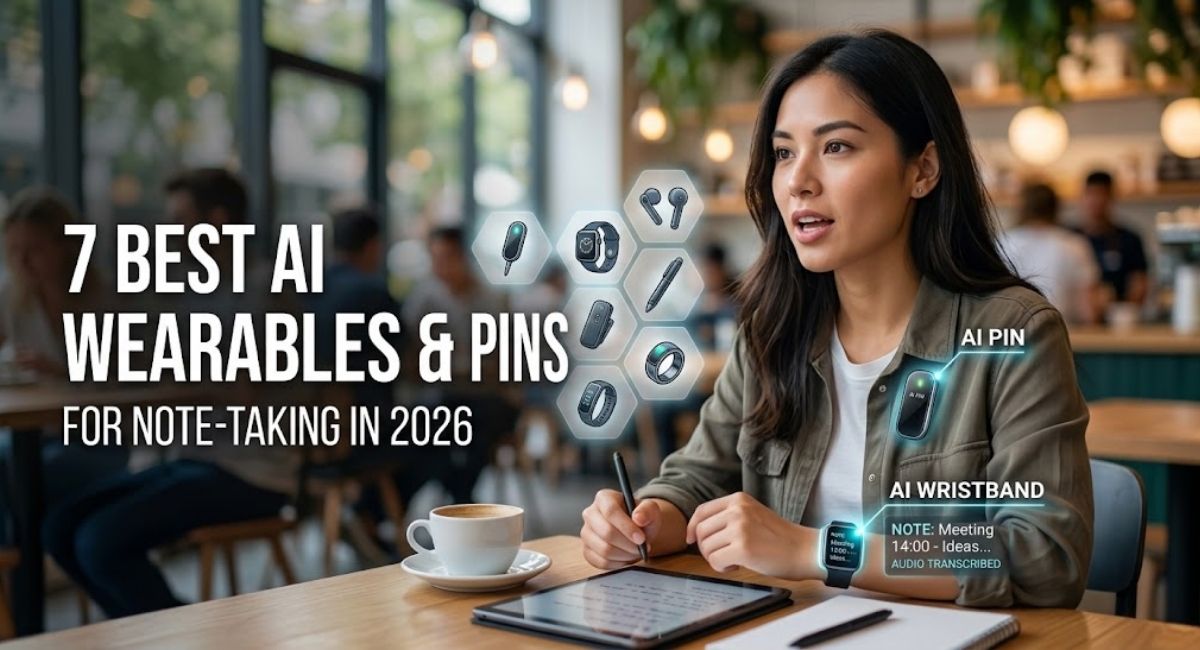
Pulling out a phone to record a conversation almost always changes the conversation itself. People sit up straighter, choose their words more carefully, or simply stop talking. That shift is a big part of why a new category of quiet, wearable recording devices has grown so quickly, aimed at capturing meetings and conversations without turning every interaction into an obvious recording session.
The category of best ai wearables 2026 has moved fast, and not every entrant has held up well. Understanding which devices genuinely work, and which types of note taking wearables suit different routines, matters more here than in most tech categories, since a few high profile early products in this space have had a rough public reception.
Why This Category Exists
The core problem these devices solve is straightforward: people lose details from conversations, whether that is a client meeting, a coffee catch up, or a quick hallway exchange at a conference, and reconstructing what was said from memory the next day is unreliable and time consuming. An ai note taking device aims to remove that burden by continuously or selectively capturing audio and turning it into organized, searchable notes.
This is a genuinely useful goal, but the hardware to deliver it reliably has taken longer to mature than some of the early marketing suggested, which is worth understanding before investing in any specific device.
A Necessary Word of Caution
Not every AI wearable pin launched with major fanfare has succeeded. One of the most heavily marketed early entries in this category shipped with significant performance and reliability issues, including overheating problems, and was discontinued within roughly a year of its release. This is not a reason to avoid the category entirely, but it is a strong argument for favouring devices with a narrower, more focused feature set and positive independent reviews over ones promising to do everything at once.
7 Types of AI Wearables Worth Considering
1. Dedicated Recording Pins
Devices like Plaud’s pin style recorders focus specifically on capturing and transcribing audio, worn as a small clip on clothing or a lanyard. Their narrow focus, just recording and transcription, tends to make them more reliable than multi function devices trying to also handle translation, search, and general assistant tasks.
2. Pendant Style Devices
Pendant devices, such as the Limitless pin, are worn around the neck and are generally positioned as an evolution of earlier, more ambitious AI pin concepts, with a stronger focus on meeting and conversation capture specifically rather than trying to replace a smartphone.
3. Smart Rings With Note Taking Features
Smart rings originally built for health tracking have started adding basic voice memo and note capture features in some newer models, offering a genuinely discreet form factor, though typically with more limited transcription depth compared with dedicated recording pins.
4. Wristband Recorders
Wristband style devices offer an alternative for people who prefer not to wear a pendant or clip on pin, often doubling as a basic fitness tracker alongside recording functionality, though battery life tends to be a tighter constraint given the smaller form factor.
5. Meeting Focused Transcription Devices
Some devices are designed specifically for professional meeting settings, prioritizing accurate speaker labelling and structured summaries over general purpose all day recording, which suits people who mainly need this capability in scheduled meetings rather than throughout the day.
6. Smart Pens With Handwriting Capture
For people who prefer taking handwritten notes, smart pens that digitize handwriting in real time and sync it to searchable text offer an alternative approach to AI assisted note taking that does not rely on audio recording at all.
7. Software Only AI Meeting Assistants
Not every solution in this space requires new hardware. Software based AI meeting assistants that join video calls directly and generate transcripts and summaries cover a large share of professional use cases without requiring a wearable device at all, which is worth considering before buying dedicated hardware.
How to Choose the Right Type for Your Routine
If most of your note taking needs happen in scheduled video calls, a software only assistant likely covers your needs without any hardware purchase. If you regularly need to capture in person conversations, meetings, or interviews away from a computer, a dedicated recording pin or pendant tends to be the more reliable choice over a multi function device trying to do too much at once.
Battery life, subscription costs for full transcription features, and how the device handles consent and privacy in recorded conversations are all worth checking carefully before committing, since these details vary significantly between devices even within the same category.
Pairing an AI Wearable With the Rest of Your Tech Setup
Most AI wearables sync notes to a phone or laptop app, so a decent set of accessories supporting that workflow matters more than it might seem. Our roundup of top affordable laptop accessories covers practical additions that support a mobile note taking workflow, and our broader list of top AI tools that make your daily tasks easier covers software worth pairing with any hardware you choose.
For students specifically, our guide to best beginner friendly AI tools for students covers lower cost software alternatives worth trying before committing to dedicated wearable hardware.
Privacy and Security Considerations
Devices that continuously or frequently record conversations raise genuine privacy questions, both for the wearer and for the people around them, and laws around consent for recording conversations vary by location, so it is worth understanding local requirements before using one of these devices regularly. Since recorded notes and transcripts often sync to cloud accounts, securing those accounts properly matters as much as choosing the right device.
Our guide to step by step securing your online accounts and our roundup of best free password managers for online security both cover practical steps worth taking before storing sensitive meeting content in any connected app.
Comparing the Main Categories
| Type | Best For | Main Limitation |
| Recording pin | All day conversation capture | Battery life and consent considerations |
| Pendant device | Meeting focused capture | Requires being worn consistently |
| Smart ring | Discreet, occasional notes | Limited transcription depth |
| Software meeting assistant | Scheduled video calls | Does not cover in person conversations |
Frequently Asked Questions About AI Wearables and Pin
Are AI wearable pins reliable enough to replace note taking apps?
For many users, yes, particularly for capturing in person conversations that a phone or laptop app cannot easily record. Reliability varies by device, so checking recent independent reviews before buying is worthwhile.
Do I need to tell people I am recording them with an AI pin?
In many places, yes, consent laws for recording conversations apply regardless of the device used, so checking local requirements before using a recording wearable regularly is important.
What happened to the Humane AI Pin?
The Humane AI Pin launched with significant ambitions but faced widespread criticism over performance and reliability issues, and the device was ultimately discontinued within about a year of its release, making it a useful cautionary example in this category.
Is a smart ring a good option for note taking?
Smart rings offer a more discreet form factor but generally provide more limited note taking depth compared with dedicated recording pins, making them better suited to occasional rather than frequent use.
Can software alone replace an AI wearable for meeting notes?
For video call meetings specifically, yes, software based assistants often cover the same need without requiring a hardware purchase. Wearables become more valuable specifically for in person conversations away from a computer.
Final Thoughts
AI wearables for note taking are a genuinely useful category, but the hype has occasionally outpaced the hardware, so choosing a device with a focused feature set and a track record of reliability matters more than chasing the most ambitious sounding product. Matching the device type to how and where you actually need to capture information will save both money and frustration.
At BYB Good Idea, we cover practical technology guidance grounded in how these tools actually perform, not just how they are marketed. Explore the resources below to keep building a note taking workflow that works for you.
Helpful resource: