
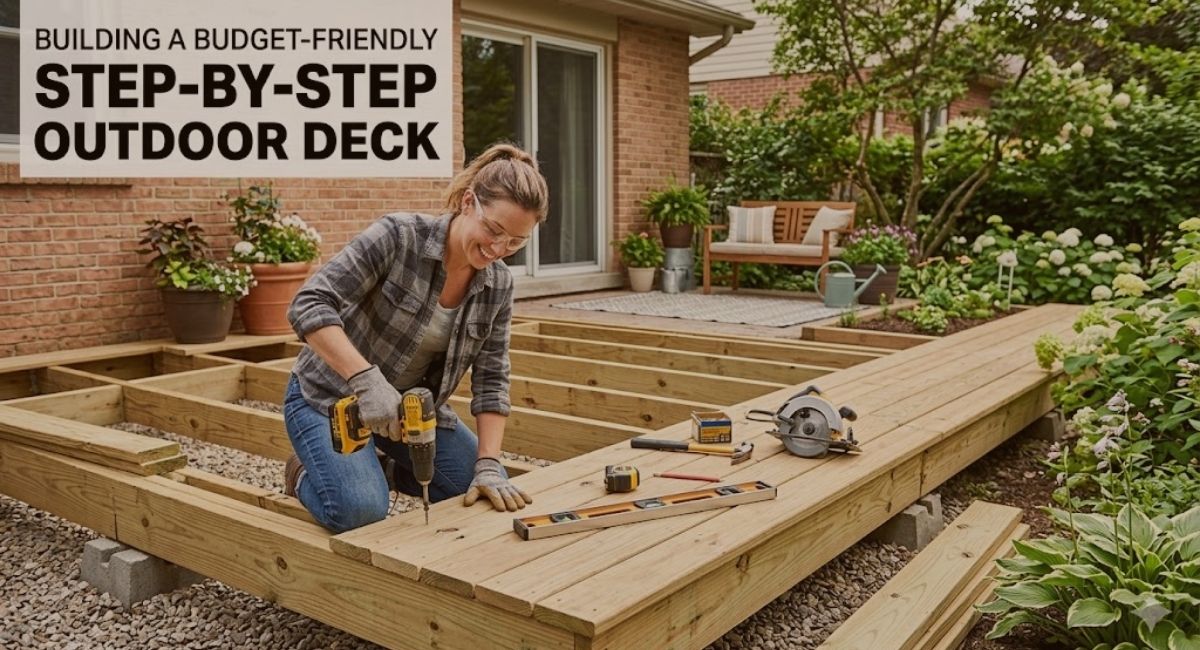
An outdoor deck can completely change how a backyard feels and functions. It creates a place where people gather for meals, relax in the evening, or simply enjoy fresh air without leaving home. Many homeowners assume a deck requires a large budget or professional builders. In reality, a well-planned deck can be built with simple tools, practical materials, and careful planning.
A budget-friendly deck focuses on smart material choices, efficient design, and doing the work yourself. When you keep the structure simple and follow a clear step-by-step approach, the project becomes manageable even for beginners.
This guide explains how to plan, design, and build a durable outdoor deck without spending a fortune. It also covers materials, safety tips, long-term maintenance, and ways to extend the life of your deck.
Why a Deck Adds Value to a Home
Outdoor living spaces continue to grow in popularity because they expand usable square footage without the cost of building an addition. A deck acts as a transition between indoor and outdoor areas.
Benefits include:
- Extra space for relaxing or dining
- Improved backyard appearance
- Increased home resale value
- A comfortable spot for family gatherings
- Better use of unused yard space
Even a small deck can change how you use your backyard. A 10×12 platform deck may only take a weekend or two to build, yet it provides years of enjoyment.
Budget-friendly decks are often simple platform decks that sit low to the ground. These designs avoid expensive railings, complex stairs, and heavy framing while still providing a strong and safe surface.
Planning Your Budget Deck Project
Planning is the step that saves the most money. Rushing into construction often leads to wasted materials or design mistakes.
Before purchasing lumber, take time to think about size, location, and usage.
Start by asking a few questions:
- How many people will typically use the deck?
- Will you place furniture or a grill on it?
- Does the deck connect to the house or stand alone?
- Is the ground level or sloped?
- Do local building rules require permits?
Most small decks can be built using pressure-treated lumber and basic framing hardware. Pressure-treated wood resists moisture, insects, and rot. It is one of the most affordable materials for outdoor structures.
A good budget approach is building a rectangular platform deck. Straight edges simplify cutting and reduce wasted boards.
When sketching your design, draw the frame layout and mark the position of support posts or deck blocks. This helps you estimate the number of joists, beams, and boards needed.
If you enjoy hands-on home improvement projects, you might also appreciate ideas from this guide on DIY furniture upgrades that enhance outdoor spaces.
Combining deck building with simple outdoor furniture projects can turn a backyard into a comfortable living area.
Choosing a Cost-Effective Deck Location
Selecting the right spot can lower construction costs and make the project easier.
A few things to look for when choosing the location:
Flat ground
Level ground reduces digging and leveling work.
Good drainage
Water should move away from the deck area.
Sun and shade balance
Partial shade keeps the deck comfortable during hot afternoons.
Easy access from the house
Many homeowners build the deck near a back door or patio entrance.
If your yard slopes slightly, you can still build a deck. You may just need longer support posts on the lower side.
Avoid placing a deck directly under large trees where falling branches or heavy shade may cause long-term issues.
Materials That Keep the Project Affordable
Material choice affects the final cost more than any other part of the project.
The most common low-cost materials include:
Pressure-treated lumber
This wood is widely used for deck framing and decking boards. It handles outdoor weather well and costs less than most alternatives.
Concrete deck blocks
Deck blocks support the frame without requiring poured concrete footings. They are ideal for small ground-level decks.
Galvanized screws and brackets
Outdoor hardware resists rust and improves safety.
Gravel
A layer of gravel improves drainage under the deck and helps prevent moisture buildup.
If you want to add a creative touch to your deck area, repurposing old tools into decorative elements can bring personality to the space. Some homeowners turn worn tools into wall hooks or garden decorations. You can see examples here:
Repurpose Old Tools You No Longer Use
Reusing materials like this keeps costs down and adds a personal element to the project.
Basic Tools Needed for Deck Construction
Building a deck does not require a full workshop. Many homeowners already own most of the necessary tools.
Common tools include:
- Measuring tape
- Carpenter’s square
- Level
- Circular saw
- Power drill
- Hammer
- Shovel
- Post level
- Safety glasses and gloves
If you do not own a circular saw, many hardware stores offer tool rentals for a small fee.
Step-by-Step Process to Build a Budget Deck
The construction process follows a clear sequence. Taking time to complete each step carefully helps avoid structural problems later.
Step 1: Prepare and Mark the Area
Begin by measuring the deck area using stakes and string.
Mark the corners of the planned deck. Measure diagonally across the corners to confirm the layout forms a square or rectangle. When both diagonal measurements match, the layout is square.
Remove grass, rocks, and debris from the area. Level the soil as much as possible using a shovel and rake.
Adding a layer of landscape fabric followed by gravel can reduce weed growth and improve drainage under the deck.
Step 2: Install Deck Blocks or Footings
Deck blocks support the weight of the structure. For a simple ground-level deck, place blocks around the perimeter and at regular intervals in the center.
Spacing often depends on the size of the deck, but many small decks use blocks spaced about 6 to 8 feet apart.
Use a level and long straight board to make sure each block sits at the same height. Adjust the soil or add gravel until the blocks are even.
Accurate leveling at this stage prevents a wobbly deck later.
Step 3: Build the Outer Frame
The outer frame forms the base of the deck.
Cut pressure-treated boards to match the planned length and width. Attach the boards using galvanized screws or structural deck screws.
Check the frame corners using a carpenter’s square to ensure they form right angles.
Once assembled, place the frame on top of the deck blocks and confirm that everything remains level.
Step 4: Install the Support Beams
Support beams strengthen the frame and distribute weight evenly.
For many small decks, beams run parallel to the longest side of the frame. Secure them using metal brackets or heavy deck screws.
The beams should rest directly above the deck blocks whenever possible. This transfers weight straight to the ground.
Double-check measurements before fastening beams permanently.
Step 5: Add Floor Joists
Joists are the boards that run across the frame and support the decking boards.
Spacing joists about 16 inches apart is common for residential decks. This spacing provides strong support while limiting the amount of lumber needed.
Use joist hangers or screws to secure each joist to the frame.
A simple technique helps maintain equal spacing. Cut a small wood block exactly 16 inches long and use it as a spacer while installing joists.
Step 6: Install Decking Boards
Decking boards form the visible surface of the deck.
Start at one edge of the deck and work toward the opposite side. Leave a small gap between boards to allow water drainage and natural wood expansion.
Use two deck screws at every joist intersection. This prevents boards from twisting or lifting over time.
Staggering board joints creates a stronger and more attractive surface.
Take your time during this stage. Straight board placement improves both appearance and long-term durability.
Step 7: Sand and Smooth the Surface
After installing all boards, inspect the surface for rough spots or splinters.
Light sanding makes the deck more comfortable to walk on, especially if children or pets will use it.
Pay extra attention to corners and board edges.
Step 8: Apply Protective Finish
Although pressure-treated wood resists rot, applying a protective stain or sealer extends its lifespan.
A quality deck stain protects against moisture, sunlight, and temperature changes.
Many homeowners wait a few weeks before staining new lumber so the wood can dry properly.
Apply stain using a brush or roller. Two thin coats usually provide the best protection.
Keeping the Deck Strong and Safe
A deck should last many years if it is built correctly and maintained regularly.
Safety practices during construction include:
- Wearing eye protection when cutting wood
- Using gloves when handling lumber
- Checking all screws and fasteners for tightness
- Confirming the deck frame is level before installing boards
After construction, inspect the deck every year. Look for loose boards, exposed screws, or signs of wood wear.
Small repairs are easier and cheaper when handled early.
Ways to Lower Deck Building Costs
Saving money on a deck project often comes down to smart planning and simple design choices.
Some practical strategies include:
Choose a smaller deck size
Even reducing the width by two feet can lower material costs.
Use standard lumber lengths
Buying boards in standard sizes reduces cutting waste.
Avoid complex shapes
Rectangular decks require fewer cuts and fewer materials.
Reuse materials when possible
Leftover wood from other projects may work for blocking or support pieces.
Build during off-season months
Some lumber suppliers offer discounts outside peak construction seasons.
Homeowners who enjoy DIY work sometimes combine deck projects with other small services like furniture repair or backyard upgrades. If you plan to turn home improvement skills into local work opportunities, these networking ideas for handyman professionals can help build connections in your community:
Best Networking Tips For Local Handyman Pros
Simple Design Ideas for a Budget Deck
A deck does not need expensive features to look inviting. Simple design elements often create the best results.
Consider adding:
- Outdoor string lighting for evening use
- Built-in bench seating along one edge
- Planter boxes at deck corners
- Weather-resistant rugs
- Compact storage benches
Plants and lighting can make a basic deck feel like an outdoor living room.
Using repurposed materials such as wooden crates or old garden tools also adds character without raising costs.
Common Mistakes to Avoid When Building a Deck
Many first-time builders make similar mistakes that lead to extra work later.
Avoid these issues:
Poor leveling
If the base blocks are uneven, the entire structure will feel unstable.
Incorrect joist spacing
Wide spacing can cause deck boards to flex or sag.
Using indoor screws
Indoor hardware rusts quickly outdoors.
Skipping drainage preparation
Standing water under a deck speeds up wood decay.
Rushing the layout stage
Accurate measurements save time and materials.
Taking a patient approach helps ensure the deck remains solid for years.
Deck Maintenance Tips That Extend Lifespan
Even well-built decks require occasional care.
Routine maintenance includes:
Cleaning
Wash the deck once or twice each year using mild soap and water.
Checking fasteners
Tighten loose screws before boards shift or warp.
Reapplying stain
Most protective stains last two to three years depending on weather exposure.
Inspecting wood condition
Look for cracks or soft spots that may need repair.
Maintaining a deck takes little time but greatly increases durability.
Estimating the Cost of a Budget Deck
Deck costs vary based on size, materials, and location.
A simple 10×12 pressure-treated wood deck often falls within a modest budget when built by the homeowner.
Typical material expenses may include:
- Lumber for framing and boards
- Deck blocks or concrete supports
- Screws and metal brackets
- Gravel and landscape fabric
- Wood stain or sealant
Doing the labor yourself removes one of the largest construction expenses.
Many homeowners complete small deck projects for a fraction of the cost charged by contractors.
Why DIY Deck Projects Are Worth the Effort
Building something with your own hands creates a different connection to your home. A deck is more than a construction project. It becomes a space where everyday moments happen.
Morning coffee, family dinners, weekend conversations, and quiet evenings often take place in these outdoor areas.
The satisfaction of stepping onto a deck you built yourself makes the effort worthwhile.
With careful planning, basic tools, and a willingness to learn, almost anyone can build a sturdy deck that enhances their outdoor living space.
Final Thoughts
A budget-friendly outdoor deck is one of the most practical home improvement projects a homeowner can complete. It expands usable space, adds visual appeal, and creates a place for relaxation and gatherings.
The key to success lies in thoughtful planning, choosing affordable materials, and following a step-by-step building approach.
Start with a simple design. Prepare the ground carefully. Install a solid frame and properly spaced joists. Finish the surface with well-placed decking boards and a protective stain.
By focusing on quality construction and steady progress, you can create a durable deck without overspending.
Once finished, that small backyard platform becomes a welcoming extension of your home where people gather, unwind, and enjoy the outdoors.