
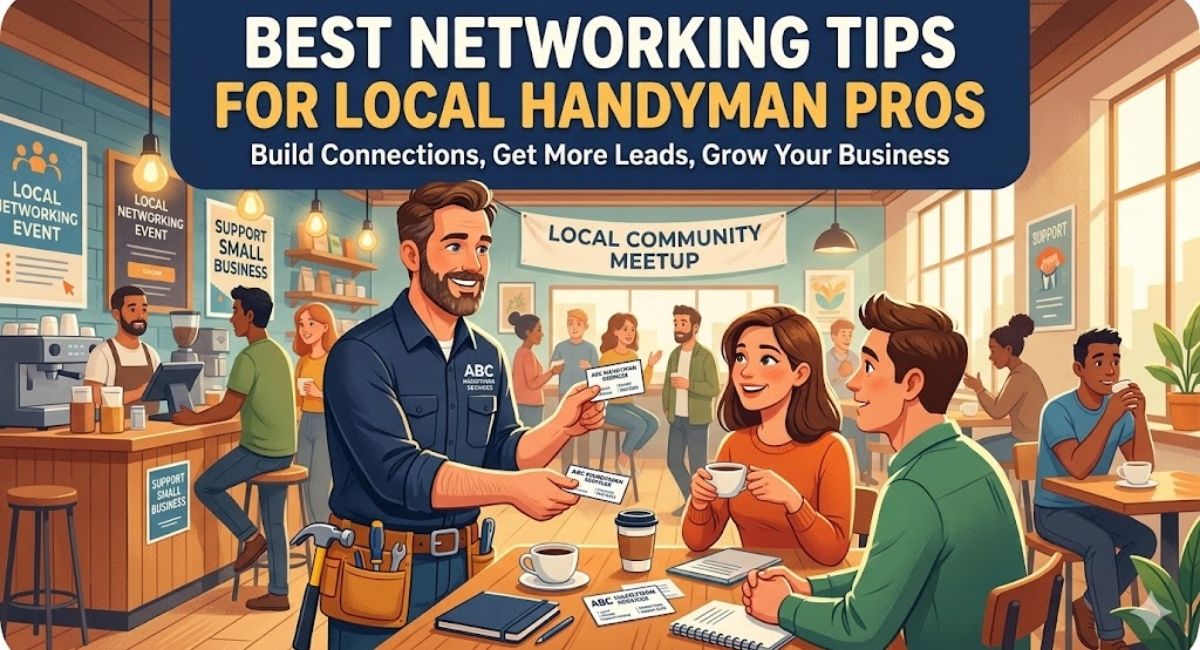
Building a successful handyman business takes more than skill with tools. Many professionals focus on repair work, installations, and home improvement tasks but overlook one factor that brings steady projects: networking. In local service industries, relationships often matter just as much as technical ability. People hire professionals they trust, and trust usually grows through personal connections, referrals, and community presence.
For local handyman pros, networking is not limited to attending business events. It happens in neighborhoods, hardware stores, community groups, and even online platforms. A strong network can turn a single job into years of repeat clients and referrals.
This guide explains practical networking strategies for handyman professionals who want to grow their reputation, increase leads, and build long term relationships in their local market. The ideas shared here come from real service industry practices and proven marketing methods that work well for small local businesses.
Why Networking Matters for Handyman Professionals
A handyman service usually grows through word of mouth. Homeowners often prefer to hire someone recommended by a neighbor, friend, or local contractor. When people hear positive feedback about your work, they feel comfortable inviting you into their home.
Networking strengthens that cycle. It helps more people learn about your work and gives them confidence in your reliability.
There are several reasons networking plays a major role in handyman success:
• Local reputation spreads faster when people know you personally
• Partnerships with contractors and agents create regular work opportunities
• Community connections increase trust among homeowners
• Local visibility helps your business stand out in a crowded market
• Strong relationships generate referrals without advertising costs
Unlike large companies that rely heavily on paid ads, handyman professionals often benefit more from personal connections. A trusted reputation within a community can bring consistent work for many years.
Start With Your Existing Network
Many professionals search for new clients without recognizing the power of their existing network. Friends, relatives, neighbors, and former coworkers can become strong supporters of your business.
Start by letting people know about your services. You do not need aggressive sales tactics. Simply explain the type of work you handle and ask them to keep you in mind when someone needs help.
Your existing network can help in several ways:
• Referring your services to homeowners they know
• Sharing your business on social media
• Introducing you to property managers or contractors
• Recommending you in neighborhood groups
Even a small circle can generate steady leads. Many successful handyman businesses began with referrals from friends and family.
Make sure your contacts know what you specialize in. For example, some professionals focus on drywall repair, furniture assembly, minor plumbing, or carpentry projects. When people understand your strengths, they can recommend you more effectively.
Build Strong Relationships With Local Contractors
Contractors frequently need dependable handyman professionals to complete smaller tasks. Large construction companies often handle major projects but outsource smaller repairs or finishing work.
Connecting with local contractors can lead to ongoing partnerships. These professionals may recommend you for tasks such as:
• Door installation and repair
• Trim and molding work
• Minor drywall fixes
• Cabinet adjustments
• Fence or deck repairs
Visit local construction sites when appropriate, introduce yourself politely, and share your contact information. Many contractors appreciate having a reliable handyman they can call when a project requires quick attention.
Networking with contractors also improves your credibility. When homeowners see that builders trust your work, they feel more comfortable hiring you.
Partner With Real Estate Agents and Property Managers
Real estate professionals often need reliable repair services. Homes being prepared for sale frequently require small fixes before listing. Property managers also handle maintenance issues in rental units.
Building relationships with real estate agents can create repeat work opportunities. Agents usually manage multiple listings at the same time, which means ongoing repair needs.
Some common tasks include:
• Patching drywall before showings
• Fixing cabinet doors and hinges
• Installing light fixtures
• Repairing baseboards or trim
• Addressing minor plumbing issues
Property managers are also valuable contacts. Apartment buildings, rental homes, and commercial spaces regularly need maintenance support.
Introduce yourself to local real estate offices and provide a simple overview of your services. If you deliver reliable work, these professionals often become long term partners.
Be Active in Your Local Community
Community involvement helps people recognize your name and associate it with reliability. When homeowners see you participating in local events or volunteering, they view your business as part of the neighborhood.
You do not need expensive sponsorships to build visibility. Simple activities can make a big difference.
Examples include:
• Participating in neighborhood cleanup projects
• Attending community events or markets
• Helping with local charity repairs
• Supporting school fundraisers
• Joining small business groups
Community presence builds trust because people see your commitment to the area.
When homeowners feel they know you personally, they are far more likely to hire you instead of searching online for an unfamiliar contractor.
Use Online Networking to Reach Local Clients
While traditional networking remains powerful, online connections have become equally important. Many homeowners search online before choosing a handyman.
Maintaining an active digital presence allows local residents to discover your services and learn about your work.
Start with simple steps:
• Create a professional business profile on social platforms
• Share photos of completed projects
• Post short tips about home maintenance
• Join neighborhood community groups
• Respond to questions related to repairs
These small efforts help position you as a knowledgeable professional.
Using social media tools free options can make this process easier. Many platforms offer scheduling features that allow you to prepare posts in advance. Content scheduler apps help maintain consistency without spending hours online every day.
Regular online activity keeps your business visible and reminds people that you are available when repairs arise.
Join Local Business Associations
Local business groups provide valuable networking opportunities. Chambers of commerce, small business associations, and trade organizations often host meetings where members exchange referrals.
These events allow you to introduce your services to professionals from different industries. For example:
• Realtors
• Interior designers
• Landscapers
• Electricians
• Plumbers
Many homeowners ask these professionals for handyman recommendations. When your name is already familiar, referrals become more likely.
Business associations also provide educational resources that help improve operations, pricing strategies, and customer service.
Networking with other small business owners creates a supportive environment where everyone benefits from shared connections.
Maintain Relationships With Hardware Stores
Local hardware stores can become powerful networking partners. Employees often receive questions from customers searching for repair professionals.
If the store staff knows your work and trusts your reliability, they may recommend your services.
Visit nearby stores regularly and introduce yourself to the team. Purchase supplies from them whenever possible and build a friendly relationship.
Consider leaving business cards at the store counter with permission. Some stores maintain bulletin boards where local service providers can display contact information.
Hardware store networking works well because it connects you directly with homeowners already planning repair projects.
Create a Professional Yet Friendly Brand Image
Networking works best when people remember your business clearly. A professional image helps you stand out while building confidence among potential clients.
Your brand image does not require complex marketing. Focus on clear communication and consistent presentation.
Key elements include:
• A simple business name that is easy to remember
• Clean uniforms or work shirts with your logo
• Professional business cards
• A clear service description
• Organized communication with clients
When people feel comfortable recommending you, they often mention professionalism as a reason. A reliable image encourages others to share your contact information confidently.
Ask for Referrals the Right Way
Satisfied customers are one of the strongest networking assets. After completing a project successfully, many homeowners are happy to recommend your services.
However, referrals do not always happen automatically. Sometimes a polite reminder helps clients remember.
When finishing a job, you might say something simple such as:
“If you know anyone who needs similar work, feel free to share my contact details.”
This gentle approach keeps the conversation natural while encouraging referrals.
You can also follow up with a short message thanking the customer for their business. A friendly follow up often keeps your service fresh in their memory.
Build Trust Through Consistent Communication
Networking depends heavily on trust. Even strong connections fade if communication becomes inconsistent.
Responding quickly to messages and calls shows respect for people’s time. Many homeowners choose professionals who respond promptly rather than those who delay replies.
Simple communication habits improve networking success:
• Answer inquiries clearly and politely
• Provide realistic timelines for projects
• Inform clients about delays or changes
• Follow up after completing work
Clear communication builds confidence in your reliability. When people trust you, they feel comfortable recommending you to others.
Use Content to Demonstrate Expertise
Sharing helpful information can strengthen your authority in the handyman field. Educational content shows potential clients that you understand home repair challenges.
For example, you might share posts about:
• Preventing water damage in kitchens
• Simple drywall repair tips
• Maintaining wooden furniture
• Seasonal home maintenance tasks
Some professionals also create short videos demonstrating common fixes. This type of content attracts homeowners who prefer learning from knowledgeable professionals.
If you want inspiration for home improvement topics, articles such as
Top 10 Home Decor Trends
provide ideas related to home updates and renovation interests.
Educational content supports networking because it positions you as a helpful expert rather than someone focused only on selling services.
Collaborate With DIY Communities
Many homeowners enjoy small DIY projects but eventually need professional help for more complex tasks. Engaging with DIY communities introduces your services to people already interested in home improvement.
You might participate in online forums, local workshops, or community groups that focus on woodworking and repair skills.
For example, guides like
Dremel Wood Carving Bits For Precision Crafting
highlight tools used in detailed wood projects. Conversations around tools often lead to discussions about repairs or installations.
By sharing practical advice without pushing sales, you develop trust with people who may later require professional assistance.
Attend Home Improvement Events and Trade Shows
Local home improvement shows attract homeowners planning upgrades or renovations. These events create an ideal environment for networking.
Even if you do not rent a booth, attending the event allows you to meet potential partners and clients.
During these gatherings you can connect with:
• Interior designers
• Flooring installers
• Cabinet makers
• Roofing specialists
• Landscaping professionals
Many of these professionals collaborate with handyman services when projects require additional support.
Bring business cards and introduce yourself politely. Simple conversations often lead to future opportunities.
Expand Your Digital Presence Through Content Collaboration
Networking also includes connecting with bloggers, home improvement writers, and local content creators. Guest articles or collaborative content can introduce your expertise to a wider audience.
Publishing informative articles on trusted websites improves credibility and increases visibility in search results.
Some platforms even provide opportunities for contributors to share knowledge and build authority.
Participating in these platforms allows you to share practical repair advice while expanding your professional network online.
Offer Small Educational Workshops
Teaching basic repair skills can be an effective networking method. Community centers, libraries, and local hardware stores sometimes host workshops where professionals share practical knowledge.
A short workshop on topics like fixing loose cabinet hinges or installing shelves can attract homeowners interested in learning.
These events provide several benefits:
• People see your expertise directly
• Participants remember your name when larger repairs arise
• You build trust through helpful education
Workshops also strengthen relationships with community organizations that may recommend your services in the future.
Keep Track of Your Networking Contacts
As your network grows, it becomes important to stay organized. Maintaining a simple contact list helps you remember important relationships.
Include information such as:
• Name and profession
• Contact details
• Where you met
• Possible collaboration opportunities
Following up occasionally with a short message or greeting keeps connections active.
Networking works best when relationships remain genuine rather than transactional. Staying in touch shows respect and appreciation for professional partnerships.
Learn From Other Home Improvement Experts
Networking is not only about gaining clients. It also helps you learn from experienced professionals.
Many contractors and builders have valuable insights about project management, pricing strategies, and customer expectations.
Reading industry related content can also strengthen your knowledge. For example, detailed guides such as
What Is Polyaspartic Floor Coating
discuss materials and installation methods used in modern flooring projects.
Understanding different aspects of home improvement allows you to speak confidently with other professionals and clients.
Knowledge strengthens networking because people respect professionals who understand their craft deeply.
Maintain a Helpful Reputation
One of the most effective networking methods is simply being helpful. When people know you as someone willing to share advice or assist others, they naturally recommend your services.
Helpful behavior might include:
• Answering quick repair questions in community groups
• Offering honest guidance even when a job is small
• Referring clients to other professionals when needed
• Supporting other local businesses
These actions build goodwill. Over time, that goodwill often returns through referrals and partnerships.
A reputation for honesty and reliability spreads quickly in local communities.
Final Thoughts
Networking for handyman professionals is not about aggressive promotion or complex marketing strategies. It is about building relationships with people who trust your work and respect your professionalism.
Successful networking combines several approaches. Personal connections, community involvement, online presence, and professional partnerships all contribute to a strong reputation.
When you focus on helping people, communicating clearly, and delivering quality work, networking becomes natural. Clients share your name because they believe in your reliability.
Over time, these connections form the foundation of a thriving handyman business. A well connected professional rarely struggles to find work because their network continues to grow through trust, referrals, and community support.
By investing time in relationships and maintaining a helpful attitude, local handyman pros can build a steady stream of opportunities while strengthening their role in the community.