Learning new skills is no longer tied to classrooms, expensive tuition, or rigid schedules. Today, anyone with an internet connection can access structured education, practical training, and professional development at no cost. Free Online Learning Platforms for Skill Development have reshaped how people grow their careers, explore new fields, and stay relevant in a fast changing job market.
This guide takes a detailed look at the most reliable and widely used free learning platforms available online. It explains how they work, what they offer, who they are best suited for, and how learners can use them effectively. The goal is not to list platforms briefly but to help readers understand how these tools fit into real learning paths and long term skill building.
The platforms covered here are used by millions of learners worldwide and offer courses in areas such as technology, business, creative skills, data analysis, communication, and personal development. While all of them provide free access, their teaching styles, course structures, and learning outcomes vary in meaningful ways.
Why Free Online Learning Platforms Matter Today
The way people learn has changed because work itself has changed. Skills that were valuable a decade ago may now be outdated. Employers increasingly focus on practical abilities, adaptability, and continuous learning rather than formal degrees alone. Free Online Learning Platforms for Skill Development help close the gap between traditional education and modern skill needs.
These platforms offer several advantages:
- Learning at your own pace without time pressure
- Access to up to date content created by industry professionals
- Opportunities to explore new career paths without financial risk
- Flexible learning that fits around work and personal responsibilities
Free learning apps and online course tools also help people who are switching careers, returning to the workforce, or simply curious about new topics. Instead of committing to long programs, learners can test their interest and ability before investing further.
What Makes a Free Learning Platform Worth Using
Not all free platforms offer the same quality or learning experience. Some focus on video lectures, others emphasize hands on practice, while some rely on peer learning and discussion.
When evaluating Free Online Learning Platforms for Skill Development, consider the following factors:
- Course quality and clarity of instruction
- Practical application through projects or exercises
- Credibility of instructors or content creators
- Regular updates to match industry trends
- Community support such as forums or peer feedback
A good platform does more than deliver information. It helps learners build confidence, apply knowledge, and measure progress.
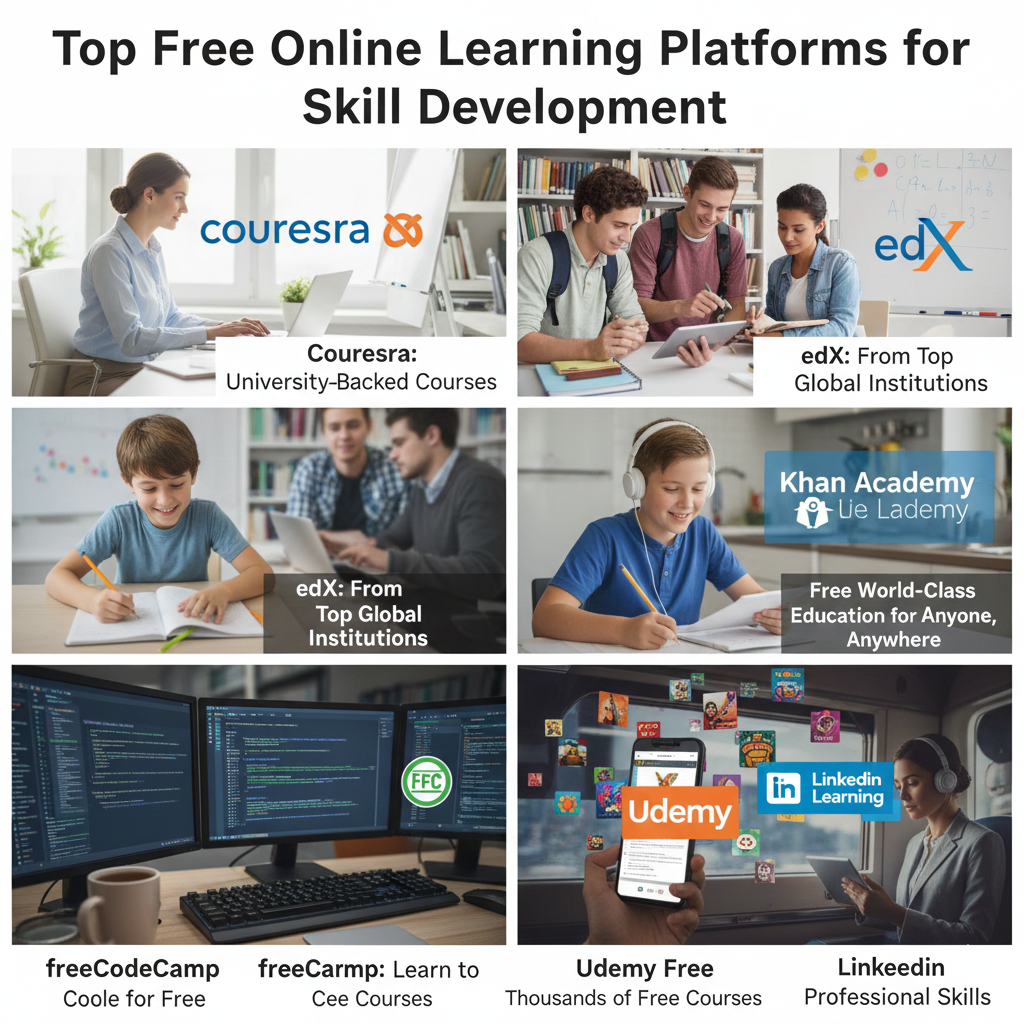
Coursera Free Learning Access Explained
Coursera is often associated with paid certificates, but many learners do not realize how much content is available at no cost. Through its audit option, users can access course videos, readings, and selected assignments from top universities and companies.
Coursera works well for learners who want academic depth combined with real world relevance. Courses are designed by institutions such as Stanford, Google, IBM, and leading universities.
Key learning areas include:
- Programming and computer science
- Data science and analytics
- Business and management
- Health, psychology, and social sciences
Coursera courses are structured with weekly modules, quizzes, and clear learning outcomes. While certificates require payment, the learning experience itself remains valuable even without formal recognition.
Best suited for learners who prefer structured courses with expert instruction and clear progression.
edX and Its Open Learning Model
edX was founded by Harvard and MIT with the goal of making education accessible worldwide. It continues to offer high quality courses through its open access model.
edX allows learners to audit most courses for free. This includes full video lectures, readings, and discussions. The platform emphasizes academic rigor while maintaining accessibility.
Popular subject areas include:
- Engineering and computer science
- Business strategy and leadership
- Public health and sustainability
- Artificial intelligence and machine learning
One notable strength of edX is its MicroMasters and professional programs. While full credentials require payment, free access allows learners to explore advanced topics before committing.
edX suits learners who value academic credibility and want exposure to university level teaching.
Khan Academy for Foundational and Technical Skills
Khan Academy focuses on free education for all and is especially strong in foundational learning. It is widely used by students, educators, and adult learners alike.
The platform offers step by step lessons with short videos, interactive exercises, and instant feedback. Subjects range from basic math to advanced computing topics.
Main learning categories include:
- Math and statistics
- Science and economics
- Computer programming
- Personal finance and test preparation
Khan Academy stands out for its clarity and simplicity. It avoids overwhelming learners and focuses on building understanding gradually.
This platform is ideal for beginners, refresher learning, and anyone who wants to strengthen core skills before moving to advanced courses.
freeCodeCamp for Hands On Technology Skills
freeCodeCamp is one of the most practical Free Online Learning Platforms for Skill Development in the technology space. It focuses on coding skills that are directly applicable to real projects and jobs.
The platform offers a self paced curriculum with interactive coding challenges, projects, and certifications that are completely free.
Core areas include:
- Web development with HTML, CSS, and JavaScript
- Front end frameworks and libraries
- Backend development and APIs
- Data analysis and machine learning
freeCodeCamp emphasizes learning by doing. Learners build projects such as websites, applications, and data visualizations that can be added to portfolios.
This platform works best for learners who prefer practice over theory and want tangible outcomes from their learning.
Udemy Free Courses and Skill Sampling
Udemy is known for its paid courses, but it also hosts thousands of free learning options. These courses are usually shorter and focus on specific skills rather than full programs.
Free Udemy courses cover topics such as:
- Basic programming and software tools
- Personal productivity and communication
- Design tools and creative skills
- Business fundamentals
The quality of free courses varies because instructors create their own content. However, many free offerings provide solid introductions and practical tips.
Udemy free courses are useful for exploring new interests, learning software basics, or gaining quick knowledge in a specific area.
LinkedIn Learning Free Access Opportunities
LinkedIn Learning provides high quality professional courses taught by industry experts. While it is typically a paid service, many users can access it for free through trial periods or library partnerships.
Courses focus on career related skills such as:
- Leadership and management
- Digital marketing and analytics
- Software and technical tools
- Communication and workplace skills
LinkedIn Learning integrates with professional profiles, helping learners showcase completed courses. The platform emphasizes practical workplace applications rather than academic theory.
It is best suited for professionals seeking to improve job performance or prepare for new roles.
Comparison Table of Popular Free Learning Platforms
| Platform Name | Primary Focus Areas | Learning Style | Best For |
| Coursera | Academic and professional skills | Video lectures and quizzes | Structured learning |
| edX | University level education | In depth courses | Academic exploration |
| Khan Academy | Foundational skills | Interactive exercises | Beginners |
| freeCodeCamp | Coding and development | Project based | Practical tech skills |
| Udemy Free | General skill topics | Short video lessons | Skill sampling |
| LinkedIn Learning | Career development | Professional tutorials | Workplace skills |
This table serves as a quick reference, but the best platform often depends on individual goals, learning style, and available time.
How to Build a Skill Development Path Using Free Platforms
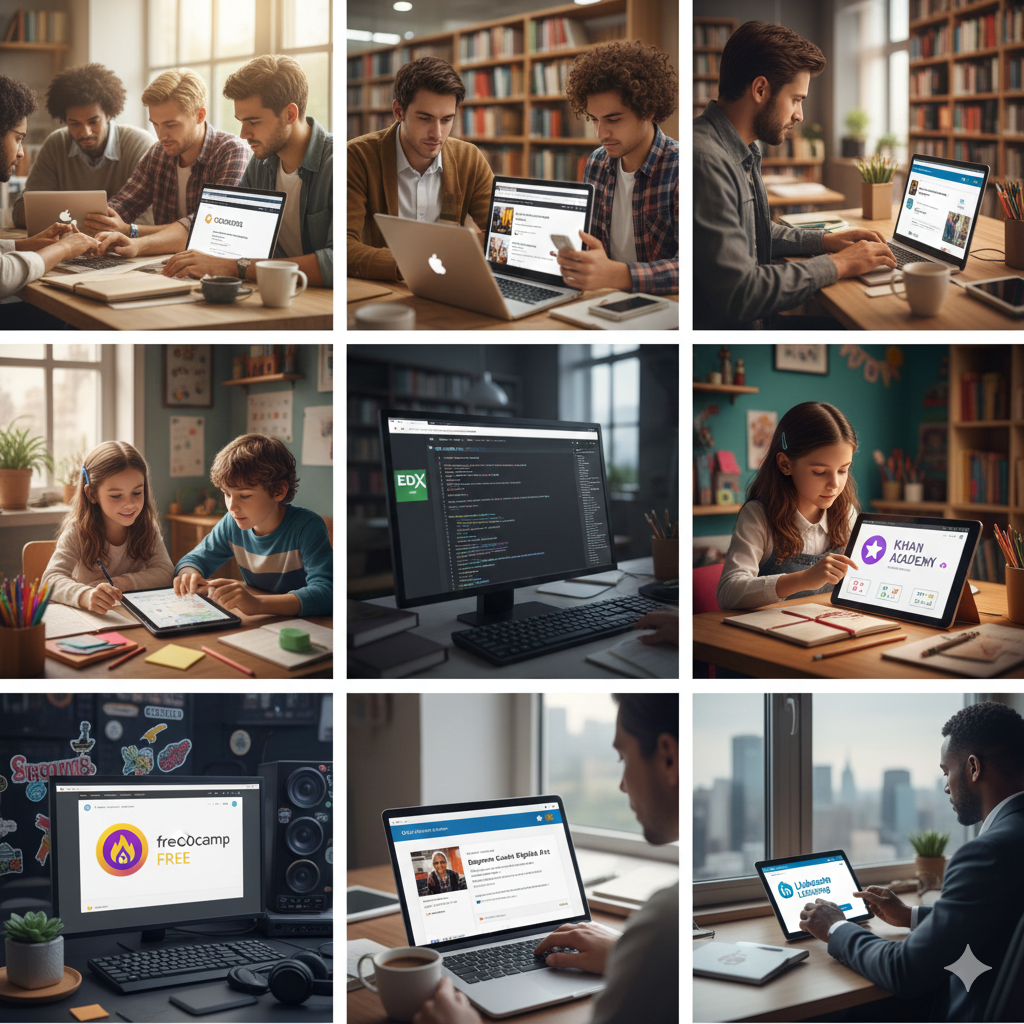
Using Free Online Learning Platforms for Skill Development effectively requires planning. Jumping between random courses may feel productive but often leads to incomplete learning.
A structured approach works better:
- Start with foundational courses to build understanding
- Move to intermediate lessons that introduce tools and frameworks
- Apply learning through projects or real scenarios
- Review and refine skills through practice
For example, someone interested in web development might begin with Khan Academy for basics, move to freeCodeCamp for hands on practice, and use Coursera or edX to explore advanced concepts.
Free learning apps and online course tools work best when combined intentionally rather than used in isolation.
The Role of Practice and Projects in Free Learning
One challenge of free online learning is the lack of accountability. Without deadlines or instructors monitoring progress, learners must create their own structure.
Practical application helps solve this problem. Platforms that include exercises, quizzes, and projects lead to better retention and confidence.
Effective learning habits include:
- Setting weekly learning goals
- Completing exercises instead of only watching videos
- Applying skills to personal or professional tasks
- Revisiting difficult topics until comfortable
Many free platforms encourage learners to build portfolios or contribute to community projects. These experiences often matter more to employers than certificates.
Evaluating Skill Progress Without Paid Certificates
A common concern is whether free learning carries value without formal credentials. While certificates can help, skills matter more in most fields.
Ways to measure progress include:
- Completing practical projects
- Teaching learned concepts to others
- Applying skills at work or in personal projects
- Receiving feedback from online communities
Platforms like freeCodeCamp and GitHub allow learners to showcase their work publicly. This visibility can be more powerful than a certificate alone.
Trends Shaping Free Online Learning in 2026
Free Online Learning Platforms for Skill Development continue to evolve. Current trends reflect changes in technology and workforce needs.
Key trends include:
- Shorter, skill focused courses
- Integration of artificial intelligence tools
- Emphasis on real world problem solving
- Growth of mobile friendly free learning apps
Learning is becoming more modular and practical. Instead of long programs, learners can stack skills over time based on immediate needs.
Challenges of Free Online Learning and How to Overcome Them
Despite the benefits, free learning platforms present challenges such as distraction, inconsistency, and lack of guidance.
Common challenges and solutions include:
- Difficulty staying motivated
Solution: Set clear goals and track progress - Overwhelming course choices
Solution: Focus on one skill at a time - Limited feedback
Solution: Join forums and peer groups - Gaps in learning structure
Solution: Follow curated learning paths
Awareness of these challenges helps learners use free platforms more effectively.
FAQs About Free Online Learning Platforms for Skill Development
Are free online learning platforms really effective for career growth?
Yes, many professionals use free platforms to gain skills that lead to job changes, promotions, or freelance work. Effectiveness depends on consistent practice and application.
Can I get a job using skills learned from free learning apps?
Many people do. Employers often value practical skills and portfolios. Free platforms that emphasize projects are especially helpful.
How many hours per week should I spend learning online?
This varies, but even five to seven hours per week can lead to meaningful progress over time when learning is focused.
Do free online courses stay updated?
Reputable platforms regularly update content. Technology focused platforms tend to refresh courses more frequently due to industry changes.
Is it better to stick to one platform or use multiple?
Using multiple platforms strategically often works best. One platform may explain concepts well, while another offers better practice.
Are free online learning platforms suitable for beginners?
Many platforms are designed specifically for beginners and offer step by step guidance without prior knowledge.
How do I avoid wasting time on low quality free courses?
Check course reviews, instructor background, and preview content before committing time.
Do free platforms include assessments?
Some include quizzes and exercises, while others rely on self evaluation. Platforms with interactive elements tend to offer better learning outcomes.
Final Thoughts on Choosing the Right Free Learning Platform
Free Online Learning Platforms for Skill Development have made education more accessible than ever before. They empower learners to grow at their own pace, explore new interests, and stay competitive in a changing world.
The key to success lies in choosing platforms that align with personal goals, learning style, and long term plans. Whether the goal is career advancement, personal growth, or curiosity-driven learning, free platforms offer a powerful starting point.
With commitment, practice, and thoughtful use of online course tools, free learning can lead to meaningful skills and real opportunities.